

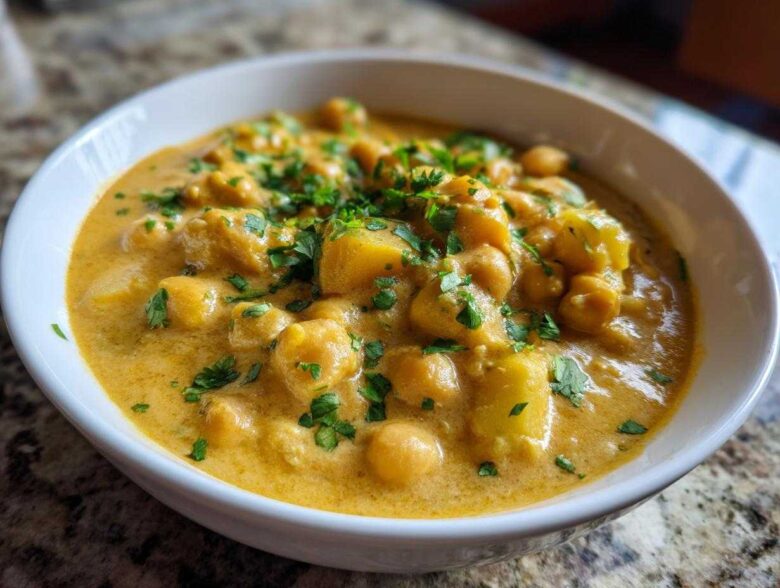
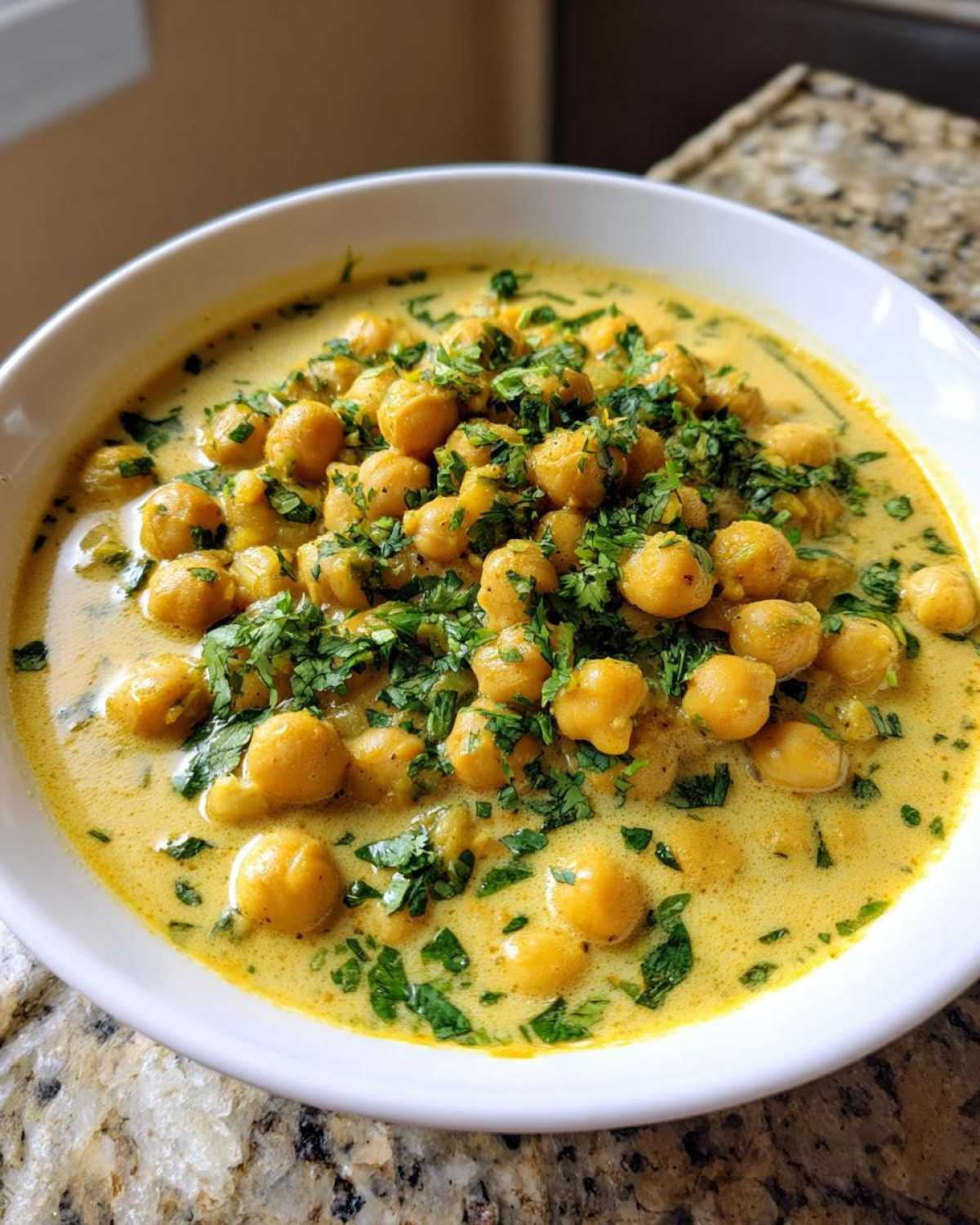
Okay, deep breaths! If you’re anything like me, you hit that 5 PM wall where you’re starving but you absolutely cannot face anything complicated. We all need those go-to meals that taste like they took hours, but honestly took thirty minutes max. Well, I’m handing you the keys to my weeknight happiness—this incredible Vegetarian Chickpea Curry with Coconut Milk.
Seriously, this recipe is a lifesaver. It’s unbelievably rich and creamy because we are using full-fat coconut milk, and it’s packed with warming spices that just make you feel cozy inside. I started making this version years ago when I needed a reliable, healthy vegan dinner option that my sometimes-picky partner would actually cheer for. It’s become a staple!
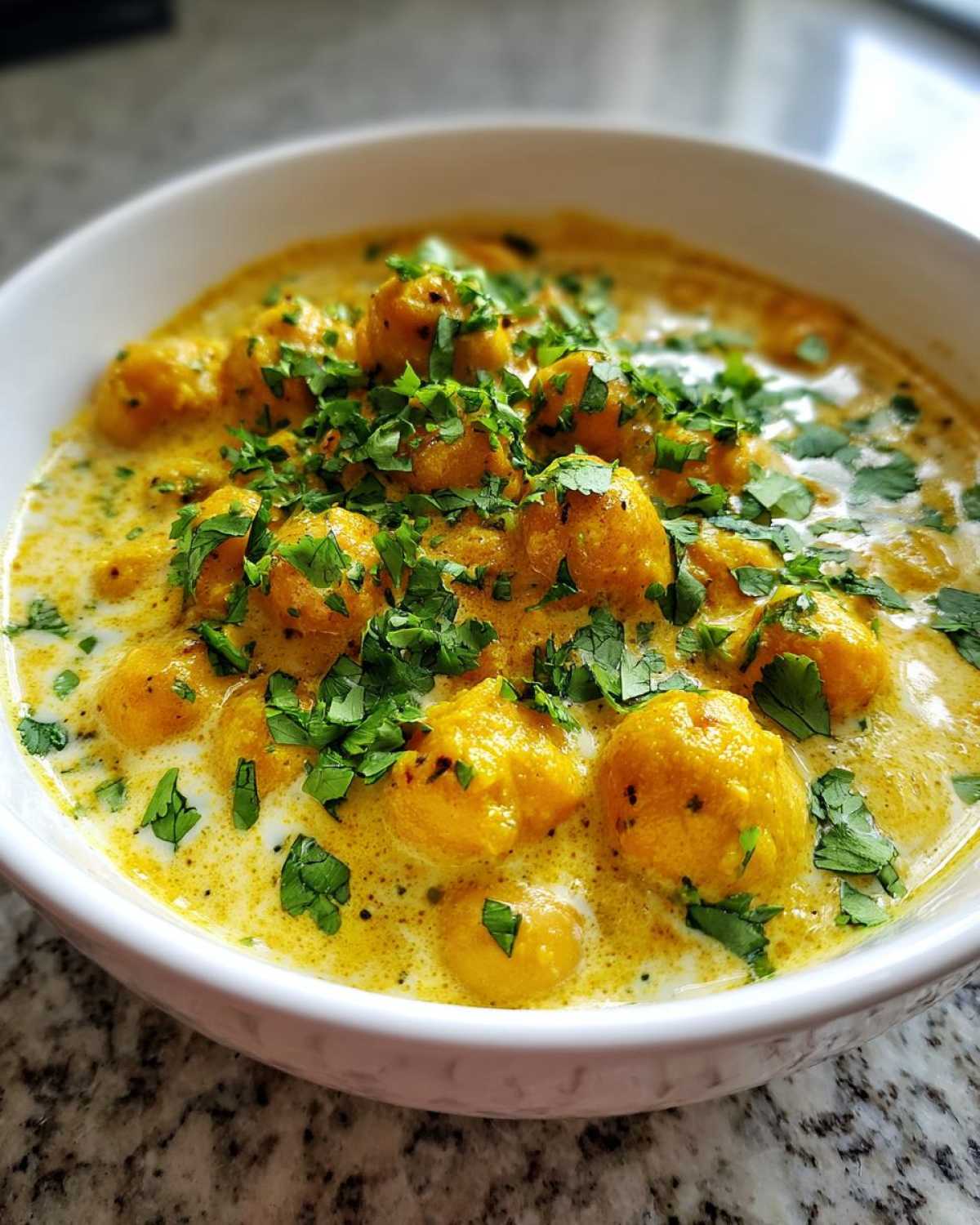
Forget expensive ingredients you only use once. This beauty relies on pantry basics and comes together so fast you’ll wonder where this recipe has been all your life. If you’re looking for some amazing quick dinner ideas, look no further. This is it!
Why This Vegetarian Chickpea Curry with Coconut Milk Works for Weeknights
Listen, the reason I keep this recipe pinned to the fridge is pure practicality. It hits all the right notes without demanding hours of your evening. It’s the perfect example of Easy Vegetarian Curry.
- It’s naturally vegan and loaded with plant protein—hello, healthy comfort food!
- The spice blend is simple, using stuff I already keep stocked year-round.
- It’s fast! You’re looking at maybe 35 minutes total from start to finish.
Quick Prep and Cook Times
Prep time clocks in at just 10 minutes, which honestly is just enough time to wash my knife and find the big pot. Then we simmer it for about 25 minutes. That means under 35 minutes total! It’s so satisfying knowing you whipped up a delicious, flavorful curry this fast. This is the ultimate Simple Dinner Using Canned Chickpeas, guaranteed.
Gathering Ingredients for Your Vegetarian Chickpea Curry with Coconut Milk
Alright, let’s talk supplies! The beauty of this recipe is that most of these things are probably already hanging out in your pantry. You won’t need anything super specialized, though I do recommend fresh ingredients where it counts. It’s all about that balance for a great chickpea side dish!
You’ll need:
- 1 tablespoon coconut oil
- 1 large onion, chopped
- 2 cloves garlic, minced
- 1 tablespoon grated fresh ginger
- 1 teaspoon ground cumin
- 1 teaspoon ground coriander
- 1/2 teaspoon turmeric powder
- 1/4 teaspoon cayenne pepper (only if you want a little kick!)
- 1 (14.5 ounce) can diced tomatoes, don’t drain them!
- 1 (13.5 ounce) can full-fat coconut milk
- 2 (15 ounce) cans chickpeas, make sure you rinse and drain these well
- 1 teaspoon salt, or just taste as you go
- 1/2 teaspoon garam masala
- 1/4 cup fresh cilantro, chopped (this is non-negotiable for garnish!)
Spice Blend Spotlight: Creating an Aromatic Spice Blend Curry Base
This is where the magic starts, folks! Cumin, coriander, and turmeric are our main players here. My biggest piece of advice—and please listen to me on this—is that you *must* bloom these spices.
Once the onions soften up and the garlic/ginger are fragrant, toss those dry spices right into the hot coconut oil for just 30 seconds. Stir constantly! When those spices hit the heat and oil, they literally wake up and release oils that give you that deep, earthy, *right-off-the-boat* Indian flavor. If you just dump them into the liquid later, you miss this crucial first step for a truly aromatic spice blend curry experience!
Choosing the Right Coconut Milk for Creamy Chickpea Stew
If you use “light” or “low-fat” coconut milk, you are setting yourself up for a soupy disappointment. We are going for a thick, luxurious, creamy chickpea stew here, not a broth! You have to grab the full-fat stuff—the kind that’s often separated in the can.
Don’t worry if you see a thick cream layer on top when you open it; that’s exactly what you want! That solid cream mixes with the tomatoes and coats the chickpeas perfectly, giving you that amazing texture you expect from a homemade coconut-based meal. Just scoop out about a cup of that thick part first, and then stir in the rest.
How to Make Vegetarian Chickpea Curry with Coconut Milk Step-by-Step
This is the main event! Don’t let all those steps scare you; it’s really just an addition game. You’re basically building layers of flavor one right after the other. If you liked my lentil and sweet potato curry, you’ll find this flow feels super familiar. Just follow the heat and you’ll be fine!
Sautéing Aromatics and Toasting Spices
First things first: get that coconut oil sizzling in your big pot over medium heat. Toss in your chopped onion and let it do its thing until it gets soft and translucent. That usually takes about 5 minutes—don’t rush this part, a nice base makes all the difference.
Next, throw in the garlic and ginger. They only need about a minute because they burn fast, so stay close and stir! Right when you start smelling that fantastic, nutty aroma, dump in your cumin, coriander, and turmeric. This is the crucial 30-second bloom. You have to stir them non-stop! If you let them sit still, they’ll scorch, and your whole quick vegan dinner will taste gritty. Trust me, you want them fragrant, not bitter!
When the spices are smelling amazing, pour in those diced tomatoes. Let that mixture cook down for two minutes. Use your spoon to scrape up anything dark stuck to the bottom—that’s pure flavor gold hiding down there!
Simmering the Flavorful Chickpea Dish
Now for the main components of our flavorful chickpea dish. Pour in the rich coconut milk and add your rinsed, drained chickpeas. Give everything a big stir to combine all those spices from the bottom.
Bring that whole thing slowly up to a gentle simmer. I mean *gentle*. If it’s boiling hard, the coconut milk can sometimes split, which nobody wants. Pop the lid on slightly crooked—just enough to let some steam escape—and let it bubble quietly for 15 minutes. This simmering time is essential for the chickpeas to soak up all that lovely coconut cream and tomato base.
When those 15 minutes are up, kill the heat. Stir in your salt and the final touch of spice, the garam masala. Give it a taste test! If it needs a bit more salt, go for it. If you want more warmth, add a tiny pinch more cayenne. Then, garnish heavy with that fresh cilantro, and you are done!
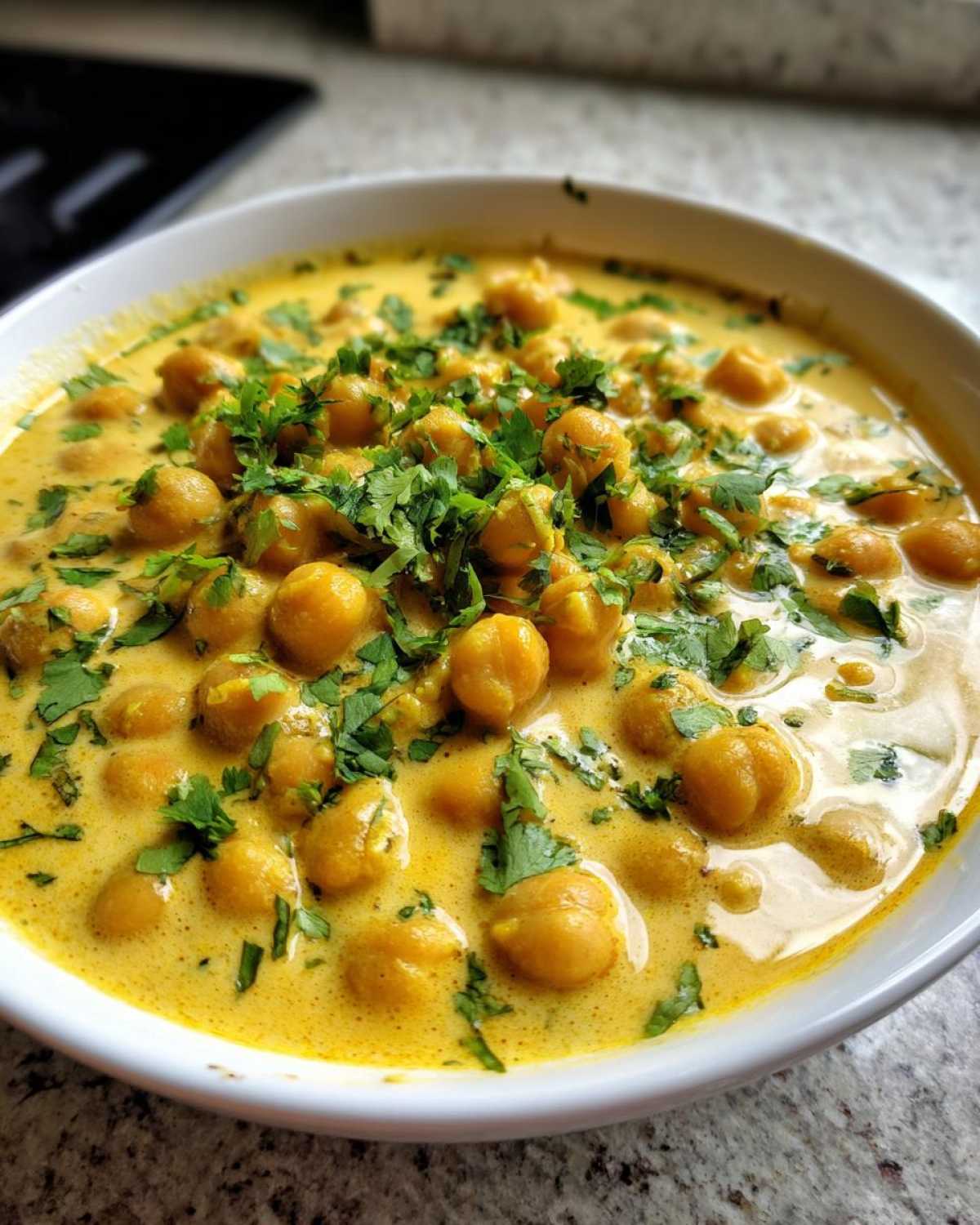
Tips for Success with Your Coconut Milk Chickpea Recipe
We’ve got the main method down, but let’s talk about tweaking this for absolute perfection, every single time. I’ve learned a few things over the years making this Easy Vegetarian Curry that I just have to share, because nobody wants a bland curry, right?
If you find the heat level isn’t quite right when you taste it after simmering, don’t panic. If it needs *more* heat, skip the cayenne next time and instead sauté a thinly sliced fresh jalapeño right along with your onions. That gives you a brighter, fresher spice kick.
Also, if you really want to bulk this up without changing the flavor profile too much, adding vegetables is your best friend. I often toss in a big bag of fresh spinach during the last five minutes of simmering. It wilts down to almost nothing, adding nutrients and bulk. Frozen peas are another winner—toss them in frozen during the final 5 minutes too. They cool the curry slightly, but they warm up fast and add a nice pop of sweetness!
Serving Suggestions for This Creamy Chickpea Stew
Okay, you’ve got this amazing, thick, flavorful curry bubbling away on the stove. Now what? You can’t just eat it straight out of the pot with a spoon—well, you *could*, but let’s make it a proper meal, right?
The coconut milk base makes this dish so versatile, but it begs to be paired with something that can soak up all that creamy sauce. My absolute favorite way to serve this homemade naan bread recipe is when the naan is still warm and slightly charred. You can use it almost like a spoon to scoop up every last bit of sauce. It’s so comforting!
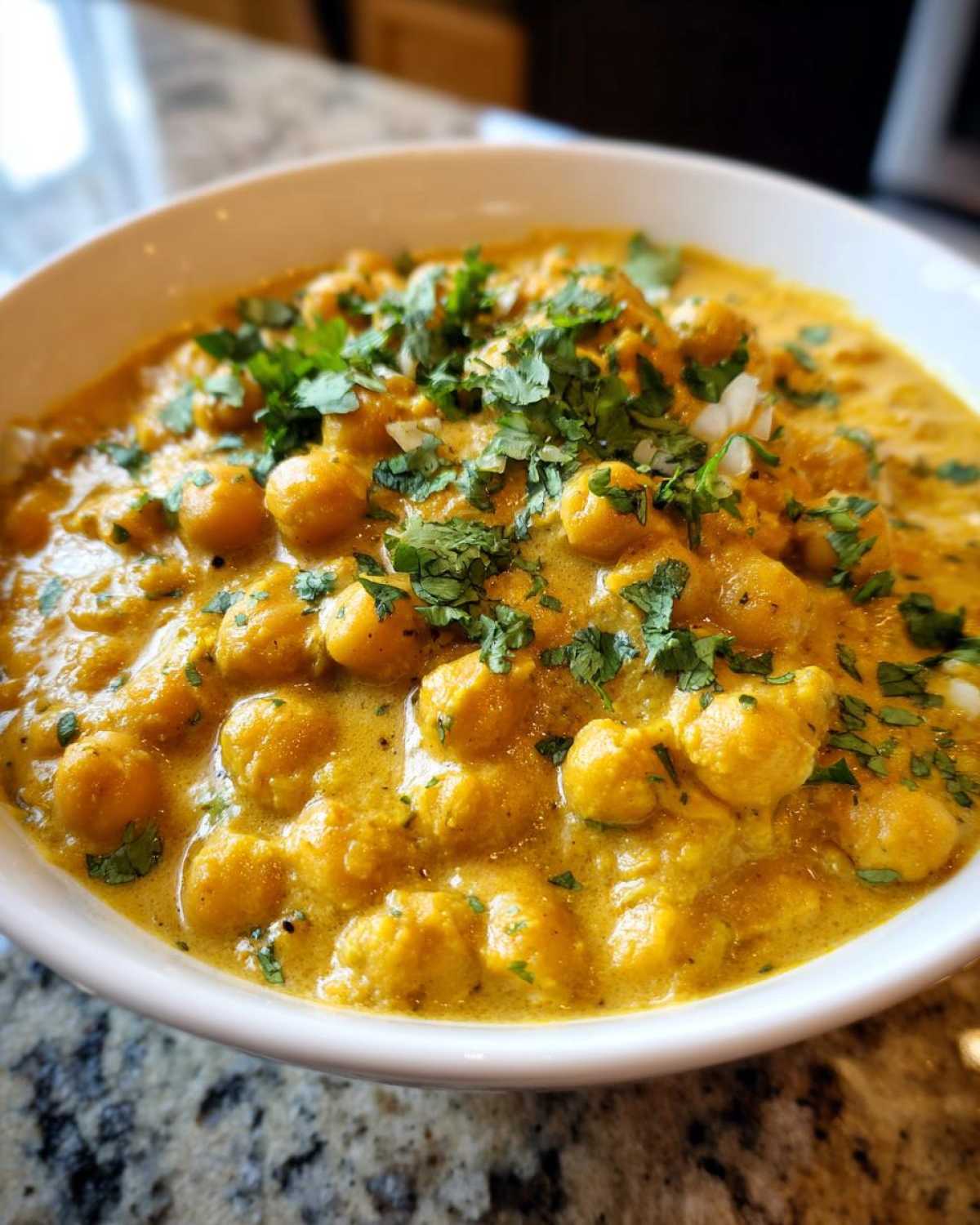
If you’re looking for something lighter than bread, fluffy basmati rice is the classic answer. I always cook mine with a tiny bit of cardamom pod while it steams—it just gives the rice an extra layer of perfume that complements the spices in the curry perfectly. If you serve it over rice, you might find you don’t even need extra salt because the rice carries the flavor so well.
But honestly, what I love most about serving this for a weeknight is that it’s flexible. If you have leftover quinoa or even some roasted sweet potatoes lying around, you can toss those underneath! It turns my simple meatless meal idea into a totally filling spread in seconds. Just make sure you have plenty of cilantro scattered on top when you serve it!
Storing and Reheating Your Vegetarian Chickpea Curry with Coconut Milk
One of the best things about making a big pot of stew or curry is having leftovers, right? Luckily, this creamy creation holds up beautifully in the fridge. It actually tastes even better the next day once those spices have had a chance to really settle in and marry overnight!
When you’re done eating, let the curry cool down just a little bit on the counter—don’t put a screaming hot pot straight into the fridge, that’s not great for safely cooling food. Then, transfer whatever’s left into an airtight container. It should stay perfectly good in the refrigerator for about four days. I always make sure I use containers that are deep, because this stuff tends to want to splash everywhere if the container isn’t quite big enough!
Reheating is super simple, but you have to treat that coconut milk gently. I always advise against using the microwave if you can avoid it because sometimes it heats unevenly and the milk can split weirdly. The best way, hands down, is back on the stovetop.
Put your leftover curry into a saucepan over low to medium-low heat. Don’t walk away! Stir it frequently. You just want it to warm through slowly. If it looks a little too thick after cooling—which it probably will, because those chickpeas are thirsty!—just add a splash of water or even a tiny bit more coconut milk while it’s warming up. It only takes about 8 to 10 minutes to get it back to that perfect, comforting consistency we want. See? Even leftovers are easy!
Frequently Asked Questions About This Indian Inspired Curry
I know when you’re reading a recipe for the first time, you always have those handful of nagging questions that pop into your head. I totally get it! I’ve collected the ones I hear most often about this amazing Indian Inspired Curry recipe below, so you can start cooking with confidence.
Can I make this a Quick Vegan Dinner by skipping the onion?
That’s a great question for when you’re running truly short on time! The onion really forms the initial sweet-savory foundation of the curry, so leaving it out does reduce the depth of flavor a bit. However, if you absolutely have to skip it, here’s what you do: Crank up the heat slightly when you sauté the garlic and ginger. Let them cook for a full minute or even two, until they are deeply fragrant, instead of just the standard minute. This helps compensate for the aromatic base that the onion usually provides. It’ll still be a fantastic Quick Vegan Dinner!
How do I adjust the heat level in this Flavorful Chickpea Dish?
The tiny bit of cayenne I listed (1/4 teaspoon) is optional, and honestly, it just gives things a gentle little nudge. If you are a true heat-seeker, you absolutely have other options! Forget the cayenne and instead mince up half a serrano or jalapeño pepper. Sauté that right alongside your garlic and ginger in Step 1. That gives you a much brighter, sharper heat.
If you don’t have fresh peppers handy, a pinch or two of red pepper flakes tossed in with the ground spices works just as well for turning up the temperature on your Flavorful Chickpea Dish. Taste before you serve, and remember you can always add more heat, but you can’t take it away!
What if I only have canned chickpeas that are low sodium?
If you’re using low-sodium chickpeas, don’t sweat it! Just make sure you taste the curry *after* the 15-minute simmer time, right before you add the garam masala. Low-sodium canned goods really don’t impart much flavor or salt into the liquid, so you’ll likely need to add closer to 1.5 or even 2 teaspoons of extra salt at the end. Always add salt little by little, stirring well after each addition, until you get that savory backbone we’re looking for. It’s key for making this Best Vegan Curry Recipe really pop!
Can I use dried chickpeas instead of canned ones?
You certainly can, but remember we are aiming for a quick meal here! If you use dried chickpeas, you need to plan way ahead. Soak them overnight, then cook them until they are tender but definitely not mushy (this can take 1 to 2 hours depending on how old they are). Once they are cooked, you can use them exactly where the recipe calls for the rinsed, drained canned ones. Just know that using dried beans will push this out of the 35-minute total time category and into the 3-hour category, so save that method for a relaxing weekend!
Nutritional Estimates for This Healthy Vegetarian Comfort Food
I always appreciate knowing what kind of fuel I’m putting into my body, especially when I’m cooking up something that feels this much like pure comfort food. This healthy vegetarian comfort food is hearty and full of fiber, which is amazing for keeping you satisfied!
Now, remember, these numbers are just a good ballpark estimate based on the specific ingredients I listed in the recipe—stuff like using full-fat coconut milk really changes the fat content, for example. If you swap in light milk or add extra veggies, these figures will change slightly, so take them as a general guideline for a single serving.
Here’s the breakdown for one serving:
- Calories: Around 450
- Fat: About 25g (Remember, a good amount of that comes from that wonderful coconut fat!)
- Saturated Fat: Around 20g
- Trans Fat: 0g, thankfully!
- Carbohydrates: Roughly 50g
- Fiber: An excellent 12g!
- Protein: About 15g
- Sugar: About 8g (Mostly natural sugars from the tomatoes and veggies.)
- Sodium: Around 450mg (This depends heavily on the salt you add at the end.)
- Cholesterol: 0mg (Since this is totally plant-based!)
For a completely balanced coconut based vegetarian meal, I almost always serve this with a half-cup of brown rice to round out the macros. Enjoy knowing you’re eating something both incredibly delicious and genuinely good for you!
Share Your Vegetarian Chickpea Curry with Coconut Milk Creations
I really hope you loved diving into this recipe for the ultimate Vegetarian Chickpea Curry with Coconut Milk! Honestly, sharing food is one of my favorite modern joys, even if it’s virtual. I want to know how it turned out for you!
Did you make any sneaky substitutions? Did you use way more ginger than I did? Tell me everything! Below the recipe card, there is a place to leave a star rating. Please take a second and rate this recipe based on how it turned out for you, whether it was a solid 3 stars or a perfect 5!
If you snapped a picture of your beautiful bowl—maybe spooned over rice or piled high with warm naan—please tag me on social media! Seeing your creations makes my day and helps other home cooks feel confident trying out new weeknight staples. You can always hop over to the contact page if you have a private question or suggestion too, but I truly love seeing your lovely meals!
PrintCreamy Coconut Chickpea Curry

A simple, flavorful vegetarian curry using chickpeas and creamy coconut milk, suitable for a weeknight meal.
- Prep Time: 10 min
- Cook Time: 25 min
- Total Time: 35 min
- Yield: 4 servings
- Category: Dinner
- Method: Stovetop Simmering
- Cuisine: Indian Inspired
- Diet: Vegan
Ingredients
- 1 tablespoon coconut oil
- 1 large onion, chopped
- 2 cloves garlic, minced
- 1 tablespoon grated fresh ginger
- 1 teaspoon ground cumin
- 1 teaspoon ground coriander
- 1/2 teaspoon turmeric powder
- 1/4 teaspoon cayenne pepper (optional)
- 1 (14.5 ounce) can diced tomatoes, undrained
- 1 (13.5 ounce) can full-fat coconut milk
- 2 (15 ounce) cans chickpeas, rinsed and drained
- 1 teaspoon salt, or to taste
- 1/2 teaspoon garam masala
- 1/4 cup fresh cilantro, chopped (for garnish)
Instructions
- Heat the coconut oil in a large pot or Dutch oven over medium heat.
- Add the chopped onion and cook until softened, about 5 minutes.
- Add the minced garlic and grated ginger. Cook for 1 minute until fragrant.
- Stir in the cumin, coriander, turmeric, and cayenne pepper. Cook the spices for 30 seconds, stirring constantly.
- Pour in the diced tomatoes and cook for 2 minutes, scraping up any browned bits from the bottom of the pot.
- Stir in the coconut milk and the rinsed chickpeas. Bring the mixture to a gentle simmer.
- Reduce the heat to low, cover partially, and let the curry simmer for 15 minutes, allowing the flavors to meld.
- Stir in the salt and garam masala. Taste and adjust seasoning if needed.
- Serve hot, garnished with fresh cilantro.
Notes
- Serve this curry over basmati rice or with warm naan bread for a complete meal.
- For extra vegetables, add one cup of chopped spinach or frozen peas during the last 5 minutes of simmering.
Nutrition
- Serving Size: 1 serving
- Calories: 450
- Sugar: 8
- Sodium: 450
- Fat: 25
- Saturated Fat: 20
- Unsaturated Fat: 5
- Trans Fat: 0
- Carbohydrates: 50
- Fiber: 12
- Protein: 15
- Cholesterol: 0