

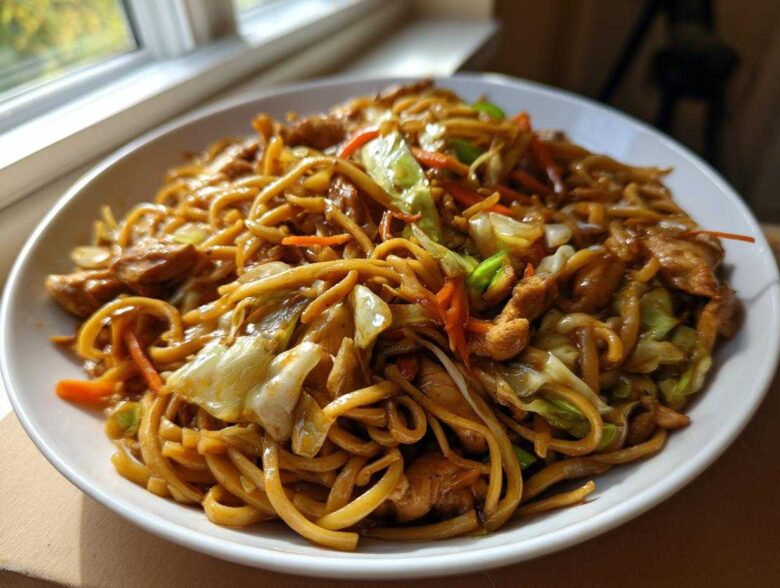
Oh my gosh, I know that feeling! That moment when you crave Chinese takeout so badly, but you look at the clock and realize ordering takes forever and costs a fortune. Trust me, I’ve been there, staring into the fridge wondering how to whip up something satisfying.
Well, I’m here to tell you that we can conquer that craving faster than the delivery driver can get to your door! This **Easy Chicken Lo Mein Recipe** is my absolute go-to when the noodle craving hits hard. We’re talking restaurant-style flavor, perfectly textured veggies, and noodles that aren’t gummy, all ready in about 30 minutes flat.
This isn’t some complicated, multi-day affair. Nope! This is the recipe I pull out for those hectic Tuesday nights when everyone is starving, and I’ve got exactly zero patience left. It’s surprisingly simple, packed with savory goodness, and honestly tastes better than what we used to order every Friday. If you want the real deal, savory, slightly sweet, and authentically seasoned, you’re in the right spot. Seriously, once you try making your own Chicken Lo Mein, you’ll never want to look back. Be sure to check out my tips for other quick dinner Asian cuisine ideas too!
Why This Easy Chicken Lo Mein Recipe Works
I can’t tell you how many times I messed up Lo Mein before nailing this version. It used to turn out soupy or the chicken was tough! This recipe solves all those classic problems. It’s designed specifically to be a fantastic Quick Weeknight Chicken Stir Fry without sacrificing that savory, deep flavor you look for in an Authentic Chinese Noodle Stir Fry.
- The chicken is lightly coated before cooking, which keeps it incredibly tender.
- We use high heat, which is crucial for getting that perfect stir-fry char instead of steaming everything into submission.
- The sauce is perfectly balanced—salty, deep, and never too watery.
Achieving Restaurant Quality Chicken Lo Mein Texture
Okay, this is where we separate the amateurs from the masters! The secret to avoiding soggy noodles is two-fold. First, you must cook the noodles until they are barely done—seriously, undercook them a bit! Second, you have to use screaming hot heat when you throw everything into that wok. High heat flash-cooks the veggies so they stay crisp-tender, and it evaporates any extra moisture quickly. That’s how you get that amazing Restaurant Quality Lo Mein Guide result every single time.
Essential Ingredients for Perfect Chicken Lo Mein
When you’re aiming for that *real* takeout flavor, you can’t skimp on what goes into the pot. Trust me, I learned the hard way that substituting one of these key sauce elements can totally throw off the balance of the whole dish. I like to keep my ingredients grouped so I know exactly what’s ready for what stage. We need stuff for the chicken, the veggies, and of course, the actual flavor bomb sauce—which you can learn more about here!
For the protein, grab yourself 1 pound of boneless, skinless chicken breast, and cut it into nice bite-sized pieces. Before it even hits the pan, we give it a tiny bath: 2 tablespoons of soy sauce and 1 tablespoon of cornstarch. That starch is our little secret weapon for making the chicken feel super tender, kind of like restaurant magic!
Then we move to the veggies. Keep it classic and simple: 1 cup of shredded cabbage, 1 cup of shredded carrots, about 1/2 cup of sliced celery, and 1/2 cup of sliced onion. Don’t forget the aromatics—you need 2 minced garlic cloves and 1 teaspoon of freshly grated ginger. Those two wake everything up!
Noodle Selection for Your Chicken Lo Mein
When it comes to noodles, you have two main paths for this **Chicken Lo Mein**. You can go with dried egg noodles, which are awesome, or chow mein noodles, which are often a bit thinner. Either way, listen closely: cook them just until they are *barely* done according to the package. The second they hit that just-right point, drain them instantly, and run cold water over them! Rinsing stops the cooking process immediately so they don’t turn into mush later when we stir-fry. Then toss them with just a teaspoon of vegetable oil so they don’t glue themselves together while you’re cooking everything else.
Preparing the Best Takeout Style Chicken Lo Mein Sauce
If you ask me, this is the soul of the entire dish. You can have the best noodles and perfectly cooked chicken, but if your sauce is flat, your whole meal falls apart! Making **How to Make Lo Mein Sauce** is shockingly easy, and we’re building layers of flavor here, not just saltiness. Think savory, a little brown butter complexity, and that deep, satisfying finish that screams ‘I should have paid twenty dollars for this!’
For our sauce base, grab a small bowl. We’re mixing up a blend that’s going to coat everything beautifully. You need 1/4 cup of regular soy sauce for saltiness, but here’s where we level up: 1 tablespoon of dark soy sauce. Don’t skip that dark soy! It doesn’t add much flavor, but wow, does it give you that deep, gorgeous, amber color that makes your dish look professional.
Next, we need depth. That comes from 2 tablespoons of oyster sauce. If you’ve never cooked with it, it’s basically concentrated savory flavor—it adds umami and a gorgeous thickness. Finish the mix with 1 teaspoon of sesame oil, 1/2 teaspoon of white pepper (it just tastes cleaner than black pepper here, trust me!), and 2 tablespoons of water or chicken broth just to loosen it up so it coats, rather than clumps.
Here’s my personal tip, learned after accidentally making one batch too salty: Whisk it all together, and then dip a clean spoon in and taste it! It should taste a little *too* strong on its own. It’s going to quiet down significantly once it hits all those noodles and veggies. If it tastes perfect in the bowl, it will taste bland on the final product. I often add a tiny splash of the homemade teriyaki sauce blend I keep on hand if I want an extra touch of sweetness, but that’s totally optional!
Step-by-Step Instructions for Authentic Chicken Lo Mein
Alright, the mise en place is done—noodles are soaking, sauce is mixed, chicken is marinated. Now comes the fun part where it all comes together incredibly fast! Remember, stir-frying is all about efficiency. You don’t have time to stop and chat while the wok is hot! We’re trying to build flavor layers quickly here, so keep your ingredients right next to the stove.
Marinating and Cooking the Chicken for Chicken Lo Mein
We already let that chicken sit with the soy sauce and cornstarch for ten minutes, right? That’s our shortcut to velveting! Now, grab 1 tablespoon of vegetable oil and get your big wok or your largest skillet blazing hot. I mean, it should be shimmering and almost smoking when you add the chicken. Toss in the marinated pieces and just let them cook undisturbed for a minute to get some color. Then, stir-fry for about 3 to 4 minutes total until they are cooked through and look lightly browned. Because we want that crisp-tender veggie texture later, you have to pull the chicken out now and set it aside. Don’t worry, it will stay warm!
Next, that beautiful vegetable mix needs the same high heat treatment. Add your last tablespoon of oil. Throw in the cabbage, carrots, celery, and onion. You only want 2 to 3 minutes here—you are looking for the vegetables to soften just a tiny bit but still have a snap when you bite them. Once you smell them getting fragrant, add your minced garlic and grated ginger. Stir them in constantly for just 30 seconds. Too long, and the garlic burns, and trust me, burnt garlic ruins everything!
The Final Toss: Combining Everything in Your Chicken Lo Mein
Okay, this is the finale! Bring that cooked chicken back into the wok with the vegetables. Now, dump in those beautiful, rinsed noodles. It will look like a mountain of stuff, but have faith! We’re going to toss this into perfection!
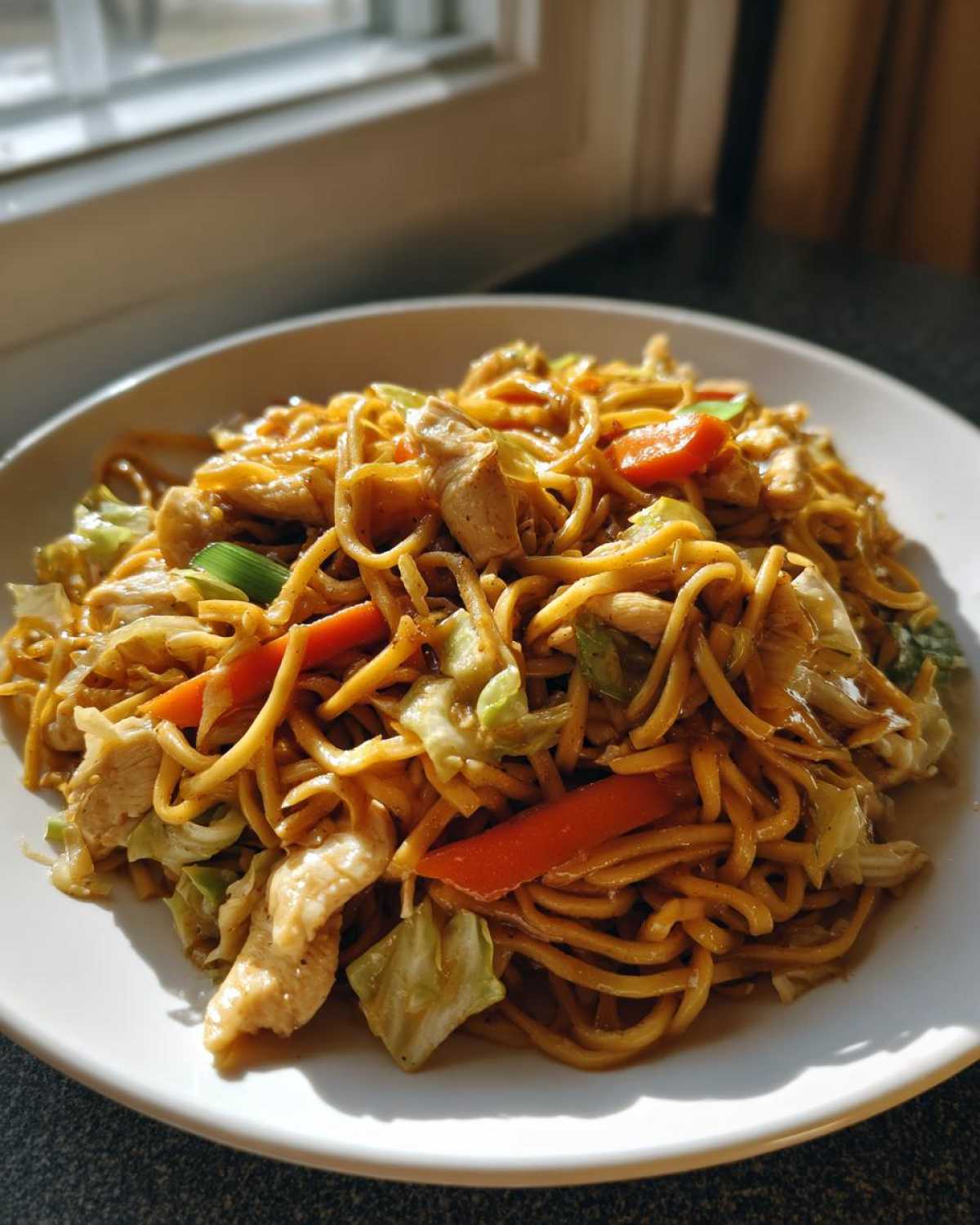
Pour that finished sauce mixture right over the top of everything. Now, you need to move! Toss, toss, toss, constantly and gently, using tongs or two spatulas. You want every single piece of noodle and vegetable coated in that mahogany sauce, and you want it all heated through. This final coating process should take no more than 1 to 2 minutes. Stop tossing the second everything looks perfectly coated and steaming hot. Serving this Stir Fried Egg Noodles with Chicken immediately guarantees you get that fantastic dry, savory bite rather than a sticky mess! That’s how we nail authentic flavor.
Tips for Success with Your Chicken Lo Mein
You’ve got the timing down, your sauce is ready, and your wok is hot—but let’s just cover a few final things to ensure you get that unbelievable Restaurant Quality Lo Mein Guide experience right here in your own kitchen. Nobody wants a disappointing noodle night, so these little bits of wisdom should help keep everything running smoothly.
First off, remember my warning about the noodles? They *must* be undercooked. I know it feels wrong when you pull them out looking a little pale, but trust me on this one. They keep cooking when they hit that hot wok and absorb the sauce. If you cook them until they are perfectly tender in the pot, they will turn gummy when you toss them later. Always err on the side of slightly too firm!
Also, if you don’t have a massive wok—and honestly, most home kitchens don’t have a restaurant-sized one—you absolutely *must* cook in batches. If you crowd the pan, the temperature drops instantly, and suddenly you are boiling your chicken and veggies instead of stir-frying them. Cook the chicken first, set it aside. Cook the vegetables, set them aside. Then combine everything at the very end. It takes an extra minute, but it’s the difference between magic and mush!
Ingredient Substitutions for Chicken Lo Mein
I love that everyone cooks differently, so substitutions are totally okay, but you need to know how they affect the flavor. If you need to go gluten-free? Easy fix! Just swap out the regular soy sauce for tamari. It keeps that salty, umami depth we need in the sauce. You can also use rice-based noodles if you find them, just follow that undercook rule!
If chicken isn’t your jam this week, this recipe is fantastic with shrimp or even cubed firm tofu. If you use tofu, just make sure you press out as much water as humanly possible before you toss it in the high heat. You want it crispy, not squishy! If you need more inspiration on getting that chicken perfectly seasoned every time, check out my guide on the best chicken marinade techniques.
Serving Suggestions for Your Savory Asian Noodle Dish
We did it! We made a fantastic **Savory Asian Noodle Dish** that tastes like it came straight from a bustling kitchen. Now, how do we serve this masterpiece up? You really don’t need much else because this Chicken Lo Mein is a total one-dish meal—it’s got protein, veggies, and your carbs all happily mixed together. But, if you want to give your family something special, I always suggest simple additions that let that rich sauce really shine.
My absolute favorite thing to hit the top of these noodles is just a sprinkle of fresh green onions. You chop them thin on a bias—that’s the fancy way of saying slice them diagonally—and they add the brightest, freshest oniony bite you can imagine. It cuts through the richness of the oyster sauce perfectly.
If your family likes a little heat, you have to serve this with chili oil! A small drizzle on the side lets everyone customize their bowl. You know how my go-to side is sometimes quick stir-fried veggies? If you have an extra ten minutes, a quick dish of Chinese green beans with garlic sauce would go amazing next to this, but honestly, if you just have some crunchy fried onions or even a side of crisp lettuce wraps, you are set for a wonderful weeknight dinner!
Storage and Reheating Instructions for Leftover Chicken Lo Mein
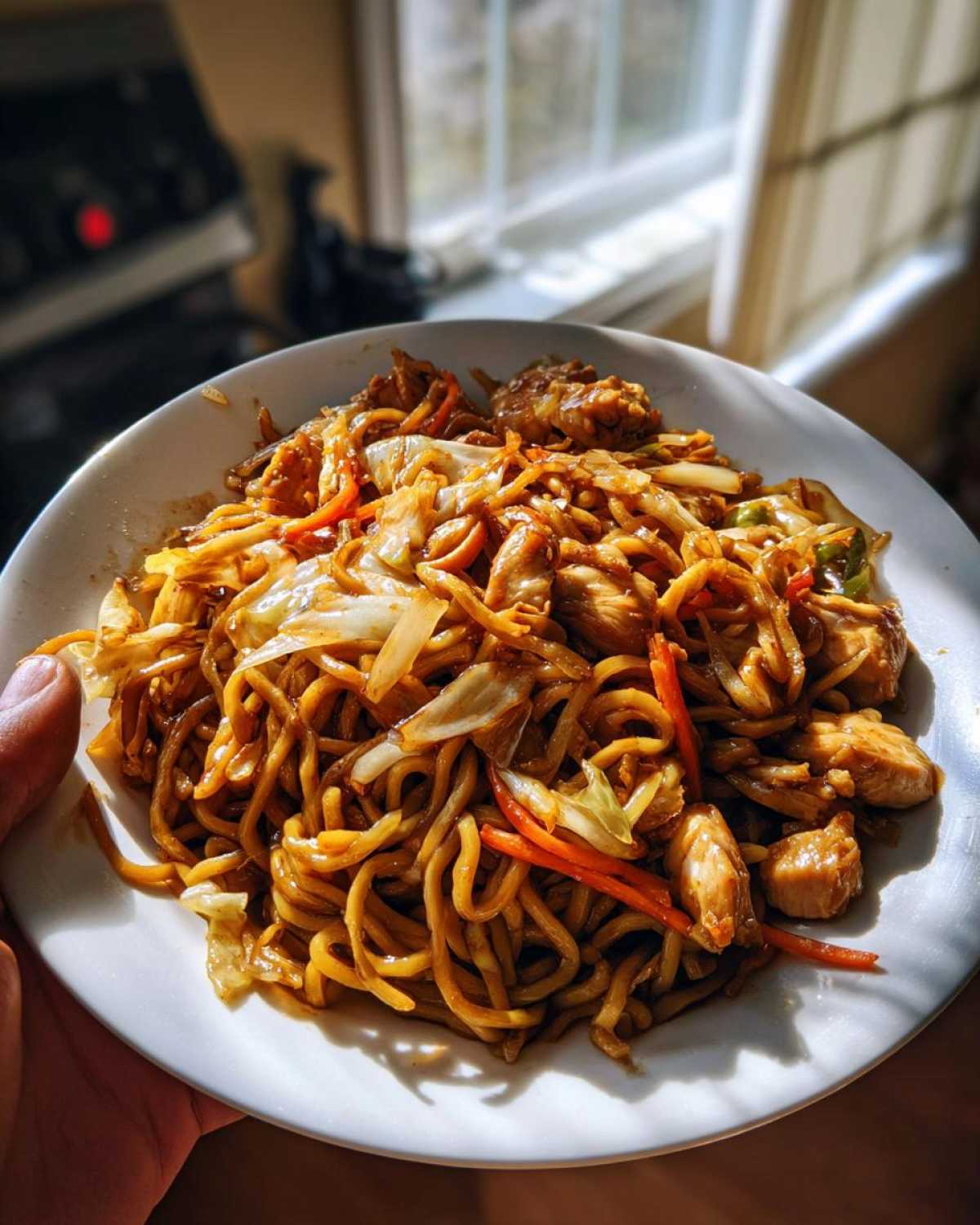
I’m shocked if we ever have leftovers of this **Chicken Lo Mein**, it usually disappears the second it leaves the wok! But just in case you miraculously manage to save some, storage is pretty straightforward. You want to keep it sealed tight.
Make sure the noodles and chicken have cooled down a touch first, and then get them into an airtight container. They will happily hang out in the fridge for about three days. Don’t try to keep them longer than that; the texture just starts to degrade, and nobody wants sad, dry noodles on day five, right?
Now, for reheating—this is important if you want to keep that nice stir-fry integrity! Throwing it in the microwave is the fastest, but you have to be careful. Microwave it in short 30-second bursts, stirring well between each burst. That helps redistribute the heat and prevents crispy bits from getting chewy!
My preferred method, if I have five extra minutes, is to use a skillet again. Add just a tiny splash of water or chicken broth (maybe a teaspoon) to the bottom of a skillet over medium heat. Tossing the leftovers in there heats them evenly and actually re-moisturizes the noodles a bit. It brings them back to life way better than the microwave ever could!
Frequently Asked Questions About Making Chicken Lo Mein
I always get flooded with questions after people try this recipe because even small details can make a big difference when stir-frying. Don’t feel silly for asking—I made all these mistakes myself on my journey to perfecting this **Chicken Lo Mein**!
Can I use spaghetti instead of egg noodles for Lo Mein?
Technically, yes, you *can* use spaghetti in a pinch, but I strongly advise against it if you are aiming for authentic results. Classic Lo Mein uses egg noodles or chow mein noodles because they have a specific starch and thickness that absorbs the Lo Mein sauce beautifully. Spaghetti is usually much starchier and thinner than traditional noodles used in this Stir Fried Egg Noodles with Chicken dish. If you use spaghetti, you absolutely MUST overcompensate by rinsing it really, really well with cold water after boiling to get rid of that surface starch, or it will turn into a sticky blob!
Seriously, why does my Lo Mein always end up soggy?
Soggy noodles are the bane of my existence, and it almost always comes down to one thing: temperature control! When you add the sauce, you have to be tossing everything continuously over high heat. If the heat is too low, the sauce doesn’t evaporate right away, and it starts to steam the noodles and vegetables instead of coating them quickly. Also, check your noodles from step one—if they are too soft when they go into the wok, they are guaranteed to be mush by the end!
How can I easily make this a vegetarian or vegan dish?
This is such a common request! Making this a vegetarian favorite is surprisingly easy. For starters, you just skip the chicken entirely, and you can learn how to adapt this flavor profile perfectly in my Vegetable Lo Mein with Chicken guide, even though we are focusing on chicken today. The biggest swap you’ll need for the sauce is in the oyster sauce. You can replace it 1:1 with vegetarian oyster sauce, which is usually mushroom-based, or you can just use a little extra soy sauce mixed with a dash of vegetarian mushroom bouillon powder for depth.
Is it okay if I use pre-shredded vegetables like carrots?
Look, I know convenience matters, but for the best texture in this Easy Chicken Lo Mein Recipe, try to buy whole carrots and shred them yourself—even using a food processor helps! Pre-shredded commercial bags are often drier and sometimes coated with anti-caking agents that don’t absorb the sauce as nicely. If you must use the bag, just make sure you stir-fry them for an extra minute to give them a touch of color before adding the other ingredients.
Estimated Nutritional Snapshot for This Chicken Lo Mein Recipe
I always like to give you a little peek at what’s inside this delicious bowl of noodles, mostly because I know we all have different eating goals! Now, please keep in mind that these numbers are just an estimate for one serving size, based on the ingredients listed in the recipe above. If you swap out the oil, use different noodles, or decide to double up on the oyster sauce (I totally don’t judge!), these numbers will absolutely change. This recipe is fantastic for a family dinner because it’s so robust!
When looking at the breakdown, you can see we get a really satisfying amount of protein here, thanks to that chicken breast we marinated so carefully. We’re looking at about 38 grams of protein per serving!
Here are the quick numbers for one serving of this **Chicken Lo Mein Recipe**:
- Serving Size: 1 serving
- Calories: 550
- Protein: 38g
- Carbohydrates: 70g
- Fat: 15g (with only about 3g saturated fat)
- Sodium: 1100mg (Yikes! That’s where the soy sauce comes in, so feel free to use low-sodium if that concerns you!)
See? It’s a complete meal in one bowl! It offers a good mix of energy from the carbs and staying power from the protein. If you are using this as a quick weeknight dinner, you probably won’t feel hungry an hour later!
PrintEasy Chicken Lo Mein Recipe
Follow these steps to make a flavorful, takeout-style Chicken Lo Mein quickly at home.
- Prep Time: 15 min
- Cook Time: 15 min
- Total Time: 30 min
- Yield: 4 servings
- Category: Dinner
- Method: Stir-Frying
- Cuisine: Chinese
- Diet: Vegetarian
Ingredients
- 1 pound dried egg noodles or chow mein noodles
- 1 pound boneless, skinless chicken breast, cut into bite-sized pieces
- 2 tablespoons soy sauce (for marinating chicken)
- 1 tablespoon cornstarch (for marinating chicken)
- 2 tablespoons vegetable oil, divided
- 1 cup shredded cabbage
- 1 cup shredded carrots
- 1/2 cup sliced celery
- 1/2 cup sliced onion
- 2 cloves garlic, minced
- 1 teaspoon fresh ginger, grated
- 1/4 cup soy sauce (for sauce)
- 2 tablespoons oyster sauce
- 1 tablespoon dark soy sauce (for color)
- 1 teaspoon sesame oil
- 1/2 teaspoon white pepper
- 2 tablespoons water or chicken broth
Instructions
- Cook the noodles according to package directions until just tender. Drain them immediately and rinse with cold water to stop cooking. Toss lightly with 1 teaspoon of vegetable oil to prevent sticking. Set aside.
- In a bowl, toss the cut chicken pieces with 2 tablespoons of soy sauce and 1 tablespoon of cornstarch. Let it marinate for 10 minutes.
- Prepare the sauce by whisking together the 1/4 cup soy sauce, oyster sauce, dark soy sauce, sesame oil, white pepper, and water or broth in a small bowl. Set aside.
- Heat 1 tablespoon of vegetable oil in a large wok or skillet over high heat until shimmering. Add the marinated chicken and stir-fry until cooked through and lightly browned, about 3 to 4 minutes. Remove the chicken from the wok and set aside.
- Add the remaining 1 tablespoon of oil to the wok. Add the cabbage, carrots, celery, and onion. Stir-fry for 2 to 3 minutes until the vegetables are crisp-tender.
- Add the minced garlic and grated ginger to the vegetables. Stir-fry for 30 seconds until fragrant.
- Return the cooked chicken to the wok. Add the cooked noodles. Pour the prepared sauce mixture over everything.
- Toss constantly for 1 to 2 minutes, ensuring the noodles and ingredients are evenly coated with the sauce and heated through. Serve immediately.
Notes
- For a gluten-free version, substitute tamari for the soy sauce and ensure your noodles are rice-based or certified gluten-free.
- Do not overcook the noodles initially; they will continue cooking slightly when stir-fried.
- Use high heat for stir-frying to achieve the best texture and prevent the ingredients from steaming.
Nutrition
- Serving Size: 1 serving
- Calories: 550
- Sugar: 8
- Sodium: 1100
- Fat: 15
- Saturated Fat: 3
- Unsaturated Fat: 12
- Trans Fat: 0
- Carbohydrates: 70
- Fiber: 4
- Protein: 38
- Cholesterol: 110