

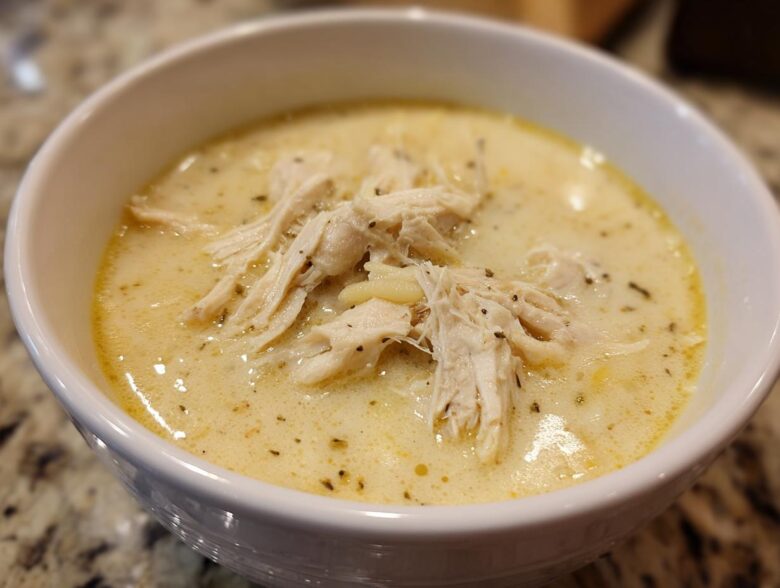
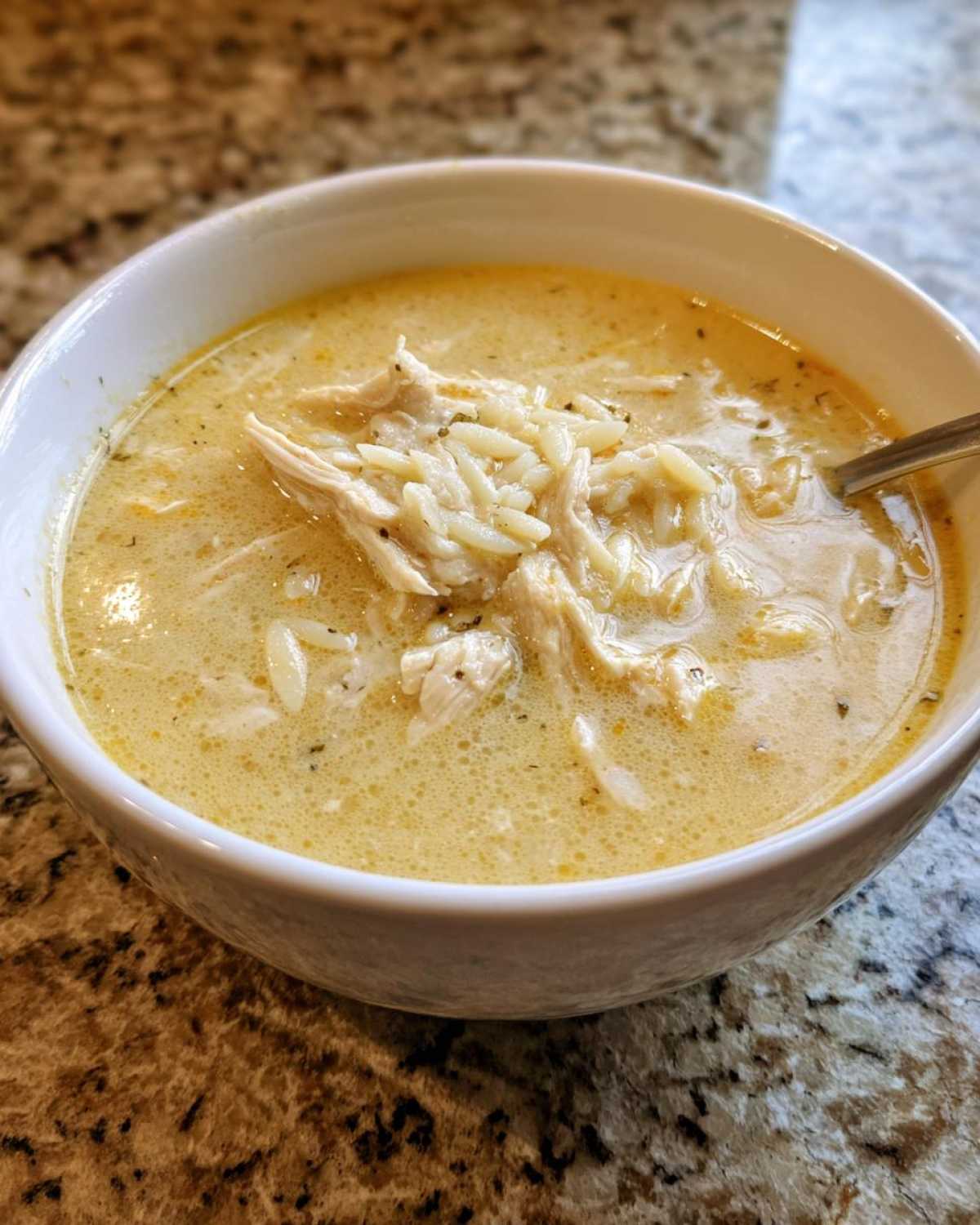
When the weather turns chilly, or maybe when you just need a hug in a bowl, there’s really nothing on this earth that beats a steaming bowl of Greek Lemon Chicken Soup. I’m not talking about any watery broth here; I mean the real deal, the creamy, luscious, sunshine-bright classic: Avgolemono. This is my absolute go-to for my family. We grew up thinking this Greek Lemon Chicken Soup was magic because it’s so light yet incredibly satisfying.
If you need a really dependable, hearty chicken dish for those nights when you don’t want to spend hours at the stove, you should definitely check out my recipe for Slow Cooker Chicken Noodle Soup sometime later. But for now, back to this gem!
The secret, as always in Greek cooking, is simplicity executed perfectly. It’s the combination of rich, homemade broth with that signature lemon-egg swirl that gives it that unbelievable velvety mouthfeel. Trust me, mastering the Avgolemono tempering technique is easier than you think, and once you nail it, you’ll feel like you can conquer the world—or at least make the best soup your friends have ever tasted.
I remember making this the first time after I got home sick from college. That bright tang of lemon instantly cut through the fog, and I felt better right away. If you want that authentic, deeply comforting flavor that tastes like Grandma’s kitchen, you’ve come to the right place. Let’s start cooking!
Why This Authentic Greek Lemon Chicken Soup Recipe Works (EEAT)
What makes this Authentic Greek Soup stand out from those thin grocery store versions? Honestly, it’s two things: depth of flavor and texture insurance! We aren’t cutting corners here. The effort we put into the broth pays off tenfold, giving us that deeply satisfying base. But the real payoff is the signature creamy finish—that perfect Velvety Soup Texture.
If you’re nervous about making a creamy soup without, well, cream, don’t stress! My method for handling the egg-lemon mix is foolproof. For a richer, more authentic bowl that truly comforts, you’ll want to check out some ideas for using homemade cream of chicken soup techniques in other dishes, too!
Achieving the Perfect Velvety Soup Texture
The key to luscious, smooth soup—and not sad, scrambled egg shreds—is tempering. Tempering is basically just taking your time! We slowly introduce hot broth to the eggs and lemon juice while whisking like crazy. This gently wakes up the eggs without shocking them. If you skip this vital step in making your Lemon Egg Soup, you risk curdling, and trust me, that ruins the whole experience. You need that luxurious, uninterrupted silkiness!
Flavor Depth from Homemade Chicken Broth Soup
If you have the time, using a whole chicken for your stock is the ultimate move for this Greek Lemon Chicken Soup. Simmering the bird with those humble aromatics—onion, carrots, celery—draws out collagen and deep savory notes that no box could ever truly capture. That’s what separates homemade from store-bought stock. If you must use store-bought bouillon, make sure it’s a really high-quality low-sodium one, and beef up the flavor with extra bay leaves while you simmer it!
Gathering Ingredients for Greek Lemon Chicken Soup
Okay, let’s get our pantry stocked for this masterpiece! You can’t rush flavor, so we need to make sure we have the right building blocks before we even think about that tricky egg part. This list ensures we get that bright, tangy flavor you’re looking for in the ultimate Greek Lemon Chicken Soup. Don’t worry, you probably have most of this stuff already hanging around the kitchen!
If you’re after tips on making your chicken extra flavorful *before* it even hits the pot for soup, you really should check out this killer chicken marinade guide I wrote about last month; it might inspire you for next time!
Broth Base and Chicken Preparation for Greek Lemon Chicken Soup
If you’re going the authentic route—and you should be!—you’ll need a whole chicken, usually around three pounds, to get that rich flavor we talked about. If you’re using store-bought broth, make sure it’s really good quality, at least 8 cups, because that’s our soup base. For the solids, grab a big onion (quartered is fine), a couple of carrots and celery stalks, a bay leaf for that subtle background note, and a teaspoon of whole peppercorns. We need those to simmer slowly and build the foundation.
The Essential Avgolemono Recipe Components
This is where the magic happens! You need four big eggs—and I mean *large* eggs. Don’t try to sneak in smaller ones; the ratio is crucial for that perfect texture. The second non-negotiable item is the lemon juice. You absolutely must use fresh! Squeezing juice from a bottle just won’t cut it here; we need about a half cup, which usually means juicing about three bright, happy lemons. This is the key ingredient in any proper Avgolemono Recipe.
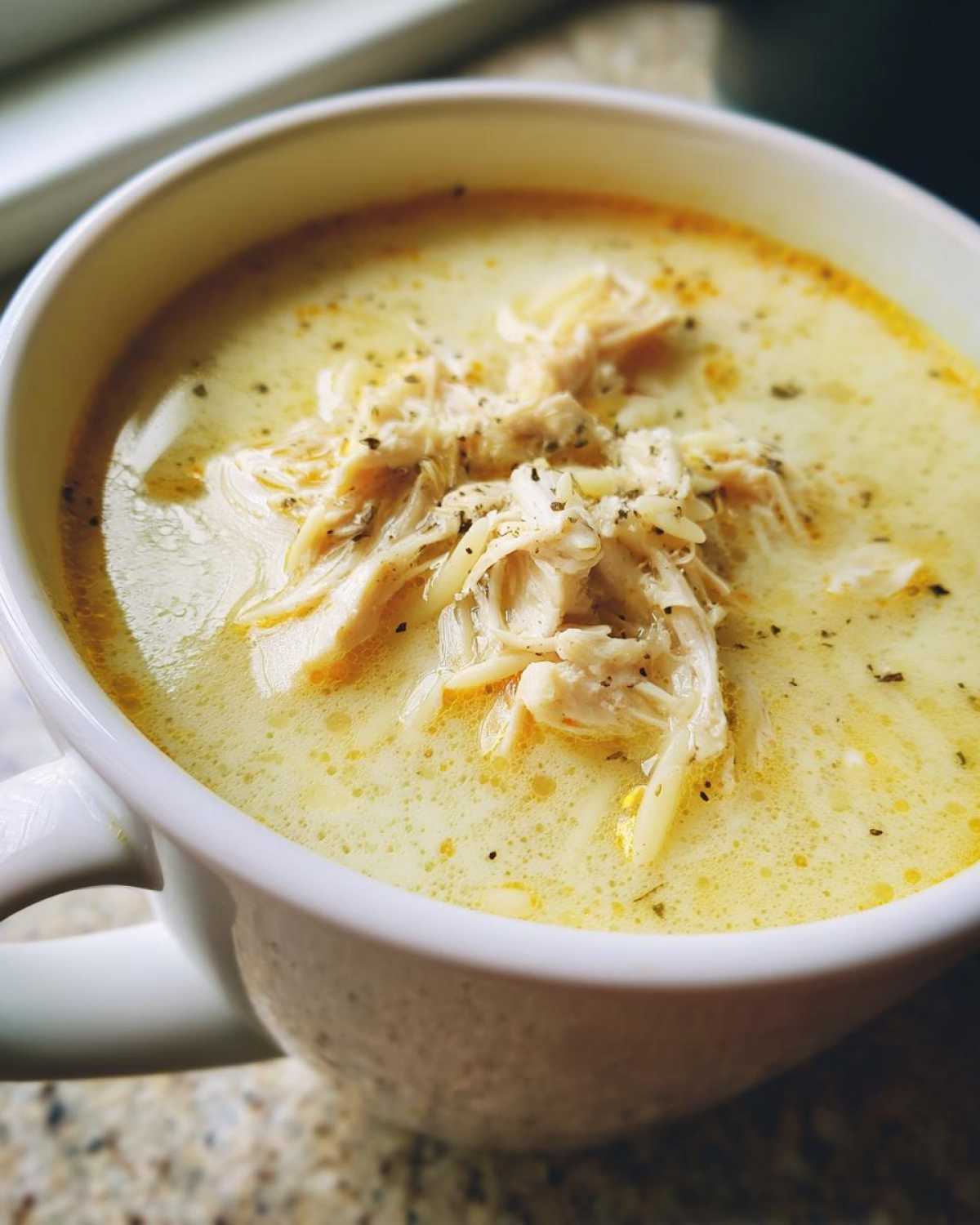
Finally, you need your starch. I’m partial to orzo pasta for a smaller bite that doesn’t steal too much broth, making it a great Orzo Chicken Soup, but long-grain rice works just as well if that’s what you have on hand. That’s everything we need to create this sunshine-in-a-bowl wonder!
Step-by-Step Instructions: How to Make Avgolemono
Alright folks, this is where the fun—and the slight bit of needed focus—comes in. If you follow these steps closely, you’ll nail the Avgolemono Recipe without stressing out. We need to treat those eggs kindly, but the overall process breaks down pretty cleanly. Pay close attention to the heat settings, especially near the end, because that’s the make-or-break moment for this Greek Lemon Chicken Soup.
Making the Rich Broth for Traditional Greek Chicken Soup
If you started with a whole chicken, get that bird into your biggest stockpot along with the onion, carrots, celery, bay leaf, and peppercorns. Cover it all with water—we’re talking about 12 cups or so, enough to cover everything nicely. Bring it up to a strong boil, and then immediately drop that heat way down so it’s just a gentle bubble. You need to skim off any nasty-looking foam that floats up during the first half-hour; it just makes your finished broth cleaner. Let this simmer for a good hour to an hour and a half, until the chicken is totally cooked through and tender. When it’s done, pull that chicken out carefully and let it cool down on a plate somewhere safe. While it cools, strain all that glorious liquid through a fine sieve into a *clean* pot. Discard all those boiled veggies and bones—we’ve squeezed all the flavor we can out of them! Once the chicken is cool enough to handle, shred up all the good meat, tossing out the skin and any major bone bits, and set that shredded chicken aside.
Cooking the Starch (Rice or Orzo Chicken Soup)
Now we take our beautiful, strained broth and bring it back up to a nice, steady simmer. Time to add your starch! Whether you’re making an Orzo Chicken Soup or going with rice, toss it in there. If you’re using orzo, which cooks up fast, give it about 8 to 10 minutes until it’s tender. If you chose rice, you’re looking at closer to 15 or 20 minutes, depending on the type you used. Keep an eye on it so it doesn’t stick to the bottom, but otherwise, this part is hands-off!
Tempering the Eggs for Creamy Lemon Soup
Here is the single most important part of How to Make Avgolemono that scares everyone away! Don’t let it scare you! Grab a medium bowl and vigorously whisk those four large eggs until they look light, frothy, and almost pale yellow. Now, slowly whisk in your fresh lemon juice—all half cup of it. This mixture is going to be very acidic, so it needs the warming-up process. Take about two cups of your hot (but not boiling!) broth and start ladling it *very slowly*—one small ladle at a time—into the egg mixture. You must whisk constantly while you pour. If you dump it in fast, you’ll have lemon scrambled eggs, and nobody wants that sad, Creamy Lemon Soup disaster! Each ladle must be incorporated before you pour the next one in. This gentle process is called tempering, and it slowly raises the temperature of the eggs.
Finishing the Greek Lemon Chicken Soup
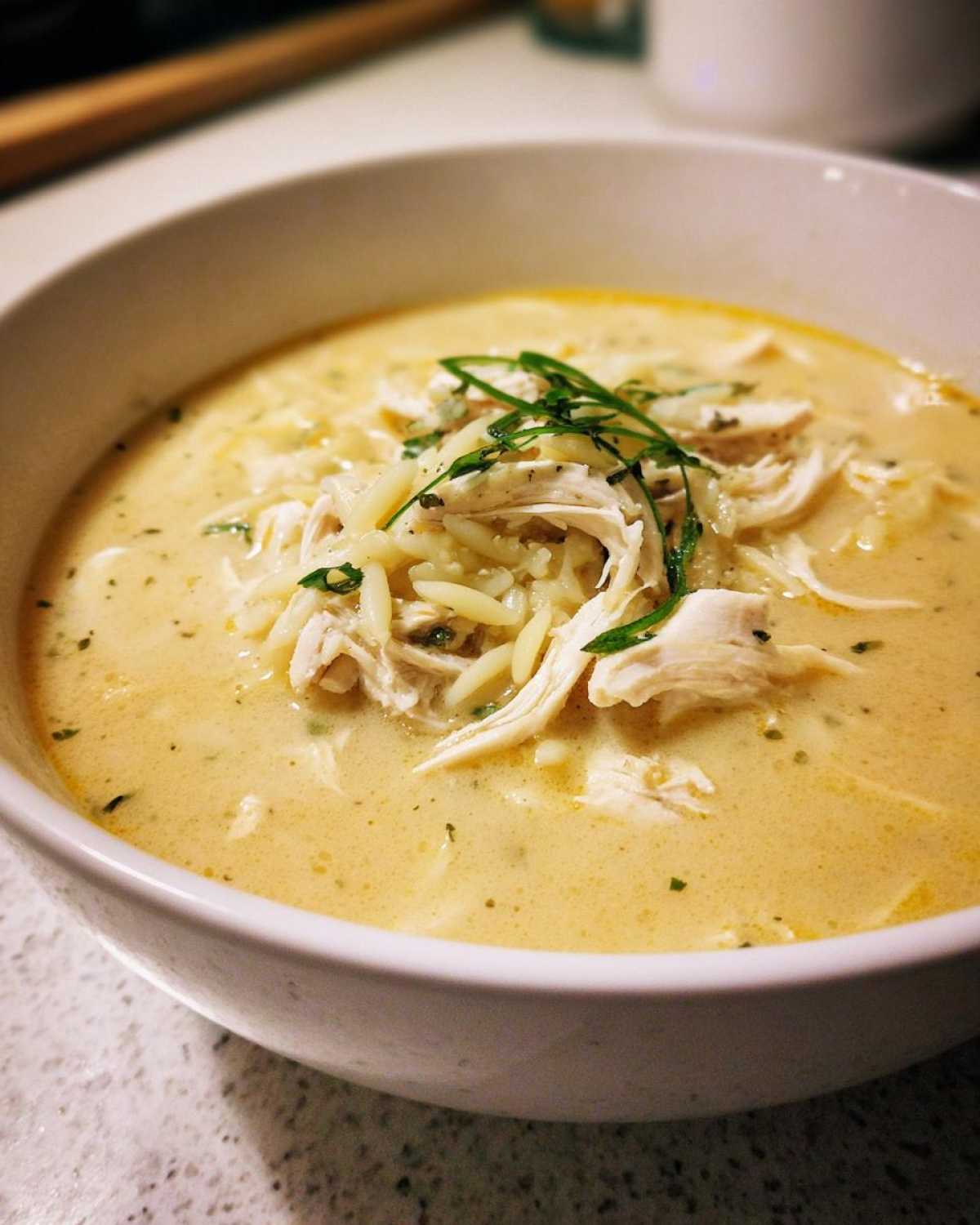
Once your egg mixture feels warm to the touch and you’ve whisked in about two cups of broth, it’s time to add it to the main soup pot. Crucially, turn your soup heat down to the *lowest* setting—we want it steaming hot, but I mean it, do not let the soup boil after the eggs go in! Pour that tempered Avgolemono Recipe mixture into the simmering broth in a thin, steady stream while stirring gently and continuously. Once it’s all in, the soup will magically thicken up right before your eyes! Now, stir in all that shredded chicken meat you set aside earlier and let it warm through for just a couple of minutes. Taste it now for salt and pepper—this is your moment to adjust the seasoning. Serve immediately! If you try to overheat this soup once the eggs are added? Yep, it’ll curdle. So keep that heat low and enjoy!
Check this out if you’ve finished dinner and are looking for a hearty second course!
Tips for the Best Greek Lemon Chicken Soup Every Time
Making this Comforting Chicken Soup truly shine means knowing how to handle a couple of little hiccups that pop up unexpectedly. Even after making this for years, sometimes the heat creeps up too high, or maybe the lemons were just extra sour that day! My goal here is to give you the confidence to fix those minor issues so you still end up with that perfectly Light and Tangy Soup every single time.
I want you to feel like a seasoned Greek Yiayia when you make this! If you’re looking for other speedy soup solutions, you absolutely must look at my short guide on making Quick & Easy Egg Drop Soup later on.
I vividly remember one winter when I was rushing—so rushed!—and I added the tempered eggs too fast. The edges of the bowl immediately started showing that cottage cheese look. Horrifying! What I did, and what you should do, is immediately pull the pot completely off the burner. Then, I grabbed a cold ladle of plain broth from a spare pot I kept handy and started aggressively whisking everything together while it cooled rapidly. It saved the batch! Slow and steady wins the race, but knowing the rescue plan is just as important.
Troubleshooting Common Avgolemono Issues
The biggest fear, as we discussed, is curdling, or the eggs setting too firmly. If you see those curds forming, yank the pot off the heat *immediately*. Do not turn the heat back on until you’ve whisked in a little bit of cold liquid—either plain water, or better yet, more cold broth—to drop the temperature fast. Keep whisking until the soup smooths out again. It might not look quite as thick, but it will be saved!
Now, about that flavor. If your soup tastes a little flat after adding the lemon, don’t just dump in more lemon juice now, because that will thin out your beautiful texture! Instead, whisk in a tiny bit more egg yolk (tempered, of course!) and perhaps a pinch of salt to brighten things up. Alternatively, if it’s just too tangy for your family’s taste, add a tiny pinch of sugar to balance the acid. It sounds backward, but sweetness rounds out tartness beautifully in a soup like this.
Ingredient Notes and Substitutions for This Avgolemono Recipe
So, you’ve got the technique down thanks to my detailed explanation on How to Make Avgolemono, but what if your pantry is looking a little bare? That’s fine! This recipe is remarkably flexible, provided you respect the power of the egg and lemon. We need to talk about what you can swap out without sacrificing the soul of this Mediterranean Chicken Soup.
Before we dive into substitutions, if you ever need a recipe that brings bold heat and amazing texture, you absolutely must check out my Chicken Poblano Soup. It’s got a totally different vibe but relies on that same deep flavor base we’re building here!
The biggest question I always get touches on that homemade broth. Look, if you’re having a weeknight emergency and cannot simmer a chicken for 90 minutes, using store-bought broth is okay in a pinch. Just make sure you are buying the best quality, low-sodium broth you can find. Adding a few fresh herbs or even a parsnip while heating that store-bought broth can help deepen the flavor profile significantly before you strain it and proceed.
When it comes to the starch, which is key for making this a full meal—and helps buffer the eggs slightly—you really only have two great choices: rice or orzo. If you use rice, go for long-grain white rice; it holds its shape best. If you’re using orzo, it cooks super fast, so be ready to move quickly when it’s done!
And please, one last time, if you take away only one thing from this: use fresh lemon juice. That bright, zesty oil from the peel is what gives the soup its authentic “zing.” Bottled juice just tastes flat and harsh compared to the real thing. It’s worth the five extra minutes of squeezing, I promise you!
Serving Suggestions for Your Traditional Greek Chicken Soup
Now that you’ve made this beautiful, bright Greek Lemon Chicken Soup, how should you serve it? Honestly, it’s so complete on its own, but it pairs wonderfully with things that offer a little textural contrast or a solid base for soaking up every last drop of that tangy broth. This is peak Greek Comfort Food ready for your table!
A couple of crusty slices of bread baked fresh are my absolute favorite—something sturdy that won’t immediately dissolve. My recipe for Easy Homemade Garlic Breadsticks is actually a perfect match because the garlic stands up to the lemon beautifully. Or, if you want to keep things feeling very light and Mediterranean, serve it alongside a simple cucumber and tomato salad dressed just with olive oil and a splash of red wine vinegar. It makes for the perfect light lunch or a wonderful starter to a larger meal!
Storing and Reheating Your Greek Lemon Chicken Soup
This Comforting Chicken Soup tastes best when it’s hot and fresh from the pot, which is why you’ll want to gobble it all up right away! Seriously, it’s addictive. But if you do manage to have some left over—maybe you made a giant batch, which is always the right idea—you need to handle it with a little care.
Because this recipe relies on the delicate chemistry of eggs and starch for its texture, leftovers look a little different once they cool down. The soup will thicken up significantly in the fridge—almost into a soft, creamy pudding consistency, which is totally normal! Don’t panic when you open the container; it’s just concentrated flavor waiting to be revived.
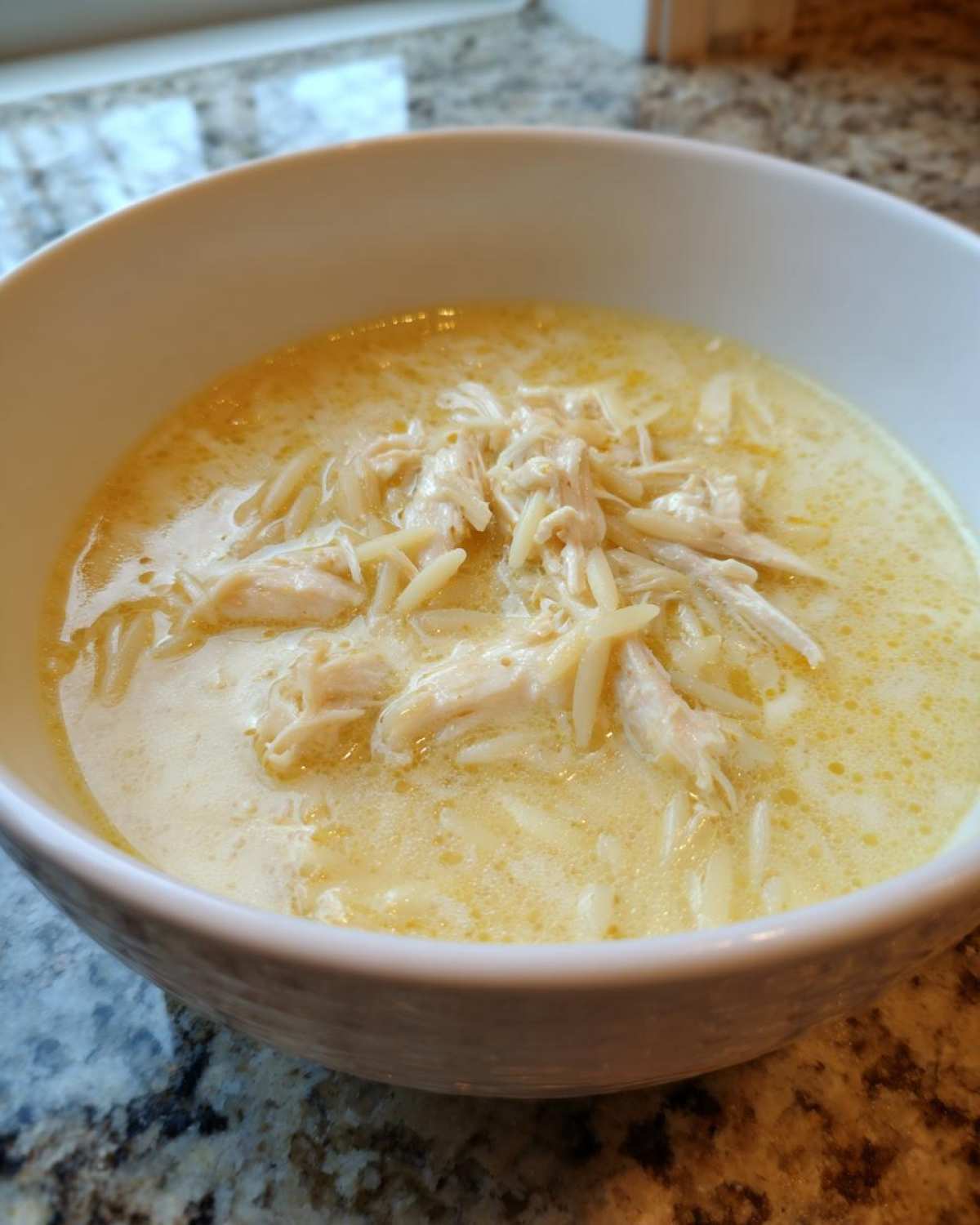
When you reheat it, you absolutely must do it gently. Never blast this soup in the microwave on high or boil it hard on the stove. High, fast heat will cause those eggs to seize up and curdle, turning your gorgeous soup grainy. Instead, transfer your portion to a saucepan over very low heat, or use short 30-second bursts in the microwave, stirring well between each one. You might need to whisk in a splash of fresh water or a tiny bit more chicken broth while heating to bring back that thinner, desirable soup consistency. You can save leftovers in the fridge for about three days. If you have too much soup, you can freeze it, but be prepared for a slightly different texture when you thaw it out later—it’s never quite the same after the deep freeze!
If you’re interested in freezing other kinds of leftovers, I have some tips on handling leftover turkey soup that might apply here too!
Frequently Asked Questions About Greek Lemon Chicken Soup
It’s totally normal to have a few questions swirling around, especially when you’re dealing with a technique like Avgolemono! I’ve gathered the questions I hear most often from friends and family when they try to make this beloved Greek Lemon Chicken Soup for the first time. Getting these little details right makes all the difference between good soup and truly spectacular Creamy Lemon Soup.
If you are planning a meal with this soup, you might want to pair it with something fresh and vibrant. My Mediterranean Chickpea Salad is fantastic alongside this bright, tangy profile—it really lets the soup shine!
Can I make the Avgolemono ahead of time?
Oh, that’s a tricky one! You can absolutely make the broth and shred your chicken meat a day or two ahead of time—that’s actually a great way to break up the work for this Authentic Greek Soup. However, I really, really advise against making the actual egg-lemon mixture (the Avgolemono) ahead of time. Eggs start to deflate a little bit once they are whisked and sit around, and the juice can become a bit harsh tasting. For that perfect, light texture, it’s best to mix your eggs and lemon juice right before you start the tempering process. Trust me, a fresh whisk is the secret to a smooth finish for your Mediterranean Chicken Soup.
What kind of chicken is best for this Authentic Greek Soup?
If you want the deepest, richest flavor possible for your broth, there’s no beating that whole chicken simmer method we talked about! It gives you the best collagen and marrow base. That said, if you are rushed, 8 cups of good quality, low-sodium store-bought broth will certainly work as a shortcut. I usually recommend avoiding using just pre-cooked chicken breast cubes, though. Why? Because when you add those plain cubes to the soup at the end, they tend to dry out quickly because they aren’t swimming in that rich broth as long. If you use pre-cooked meat, add it right at the very end when you add the tempered Avgolemono, just long enough to heat it through gently.
How do I ensure my Lemon Egg Soup is light and tangy?
This comes down entirely to the lemon-to-broth ratio. The recipe calls for half a cup of fresh lemon juice, which seems like a lot, but it’s necessary to cut through the richness of the eggs and the starch. If you taste your broth *before* adding the Avgolemono and it seems just a tiny bit under-seasoned on the tang factor, don’t panic and dump in more lemon juice later! After the eggs are tempered and added, adding *more* raw lemon juice can shock the eggs and curdle them. Instead, hold back about an eighth of a cup of your initial broth before you temper the eggs. If the final soup needs a brighter kick, whisk that small amount of reserved, *unheated* broth into your egg mixture during the tempering step—it gives you that sunshine flavor without risking the texture of your beautiful Lemon Egg Soup!
Nutritional Estimates for This Comforting Chicken Soup
I know some of you are tracking macros or just curious about what you’re packing into that bowl of restorative goodness. Since everyone’s kitchen is a little different—maybe you’re more generous with the olive oil, or maybe you manage to skim every last bit of fat off that homemade broth—these numbers are just ballpark estimates for one serving of this Comforting Chicken Soup.
Remember, this is based on the assumption you’re using the standard recipe proportions of orzo/rice versus the actual shredded meat. If you lean heavily on the pasta, the carbs will climb a bit, and if you’re using lighter homemade broth, the fat will naturally drop!
For reference, here is what this big batch usually works out to per generously large ladle-full:
- Serving Size: 1.5 cups
- Calories: 350
- Fat: 12g (Saturated Fat: 3g, Unsaturated Fat: 9g, Trans Fat: 0g)
- Cholesterol: 150mg
- Sodium: 450mg
- Carbohydrates: 30g
- Fiber: 2g
- Sugar: 4g
- Protein: 32g
See that protein count? That’s that lovely shredded chicken doing the heavy lifting! It makes this soup feel substantial without weighing you down. If you’re experimenting with different ingredients or want more savory ideas, you might find this recipe for Savory Oatmeal with Egg and Cheese offers a fun change of pace for breakfast or a light dinner.
This is a fantastic, relatively lean soup, especially considering how rich and decadent it tastes. It truly lets you enjoy amazing flavor without feeling guilty. It’s sunshine and comfort packed into one bowl, just as it should be!
PrintAuthentic Greek Avgolemono Chicken Soup

A recipe for traditional Greek Lemon Chicken Soup made with a rich broth, rice or orzo, and the signature creamy lemon-egg mixture (Avgolemono).
- Prep Time: 20 min
- Cook Time: 90 min
- Total Time: 110 min
- Yield: 6 servings
- Category: Soup
- Method: Stovetop
- Cuisine: Greek
- Diet: Low Lactose
Ingredients
- 1 whole chicken (about 3 lbs) or 8 cups homemade chicken broth
- 1 large onion, quartered
- 2 carrots, roughly chopped
- 2 celery stalks, roughly chopped
- 1 bay leaf
- 1 teaspoon whole black peppercorns
- 1 cup long-grain white rice or orzo pasta
- 4 large eggs
- 1/2 cup fresh lemon juice (about 3 lemons)
- Salt and freshly ground black pepper to taste
- Fresh parsley, chopped, for garnish
Instructions
- If using a whole chicken, place the chicken, onion, carrots, celery, bay leaf, and peppercorns in a large pot. Cover with water (about 12 cups). Bring to a boil, then reduce heat and simmer for 1 to 1.5 hours, or until the chicken is cooked through. Skim off any foam that rises to the top during the first 30 minutes.
- Remove the chicken from the pot and set aside to cool. Strain the broth through a fine-mesh sieve into a clean pot, discarding the solids. You should have about 8 cups of broth.
- Shred the cooled chicken meat, discarding the skin and bones. Set the meat aside.
- Bring the strained broth to a simmer. Add the rice or orzo. Cook according to package directions, usually 15 to 20 minutes for rice or 8 to 10 minutes for orzo, until tender.
- While the rice/orzo cooks, prepare the Avgolemono. In a medium bowl, whisk the eggs vigorously until they are light and frothy. Slowly whisk in the fresh lemon juice.
- Temper the egg mixture: Ladle about 2 cups of the hot broth, one ladleful at a time, into the egg-lemon mixture while whisking constantly. This prevents the eggs from scrambling.
- Reduce the heat under the soup pot to low. Slowly pour the tempered Avgolemono mixture into the soup pot in a thin stream, stirring gently and continuously. Do not let the soup boil after adding the Avgolemono.
- Stir in the shredded chicken meat. Heat through gently for 2 minutes. Taste and adjust seasoning with salt and pepper.
- Serve immediately, garnished with fresh parsley.
Notes
- To prevent the Avgolemono from curdling, keep the soup heat very low when adding the tempered egg mixture. The soup should be steaming, not boiling.
- If you use store-bought broth, use a high-quality, low-sodium version and add extra aromatics like a bay leaf while heating.
- You can substitute orzo pasta for rice, or use both for a heartier soup.
Nutrition
- Serving Size: 1.5 cups
- Calories: 350
- Sugar: 4
- Sodium: 450
- Fat: 12
- Saturated Fat: 3
- Unsaturated Fat: 9
- Trans Fat: 0
- Carbohydrates: 30
- Fiber: 2
- Protein: 32
- Cholesterol: 150