

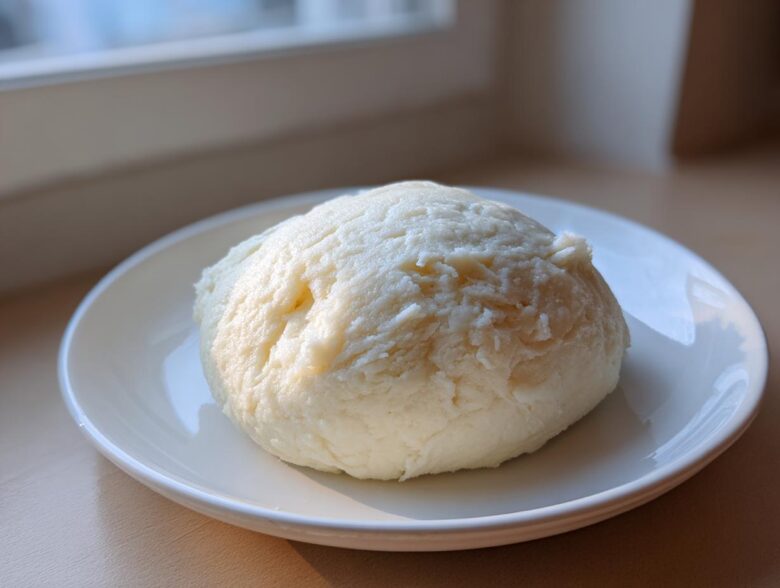
When I think about true comfort food, my mind immediately goes straight to the heart of West Africa. There is nothing quite as satisfying as scooping up a rich stew with a perfectly smooth, stretchy ball of fufu. Seriously, mastering this dish felt like unlocking a secret level in my cooking journey! I remember my first few attempts—lumps everywhere, or the dough was just too soft to handle the soup. Ugh! But don’t you worry about all that frustration now. I’ve finally nailed down what I promise is an Easy Fufu Recipe for Beginners using simple cassava flour. Trust me, if I can get this smooth and bouncy on the stovetop on my first try now, so can you!
What is Fufu and Why This Easy Fufu Recipe for Beginners Works
So, what exactly is fufu? People sometimes call it a side dish, but it’s way more important than that! It’s really the ultimate African Staple Dough, often referred to as a Swallow Food Recipe because you use it to scoop up rich, flavorful sauces. The texture is key here—it needs to be smooth, elastic, and sturdy enough to hold its shape when dipped in soup. We want that authentic, comforting experience that makes it such a vital part of Authentic African Food traditions across the continent. Visit our main blog for more recipes like this!
That’s why I decided this Easy Fufu Recipe for Beginners focuses only on cassava flour. It truly is the most forgiving flour when you’re mixing it for the first time. You get that classic smooth fufu texture without the fuss!
Understanding Cassava Fufu Recipe vs. Other Fufu Types
You’ll see lots of different flours used, and that changes everything! A Cassava Fufu recipe tends to be slightly more pliable and less heavy than one made with just yam or unripe plantain. While Plantain Fufu has a wonderful deep flavor, sometimes it binds too quickly for someone new to mixing the dough. For now, stick with the cassava flour; it gives you that perfect window of time to stir and smooth it out before it sets up perfectly.
Ingredients Needed for Authentic Fufu Preparation
Okay, let’s look at what you need for this Traditional Fufu preparation. This recipe is wonderfully simple ingredient-wise, which is great when you are trying something new! You just need three things to get started making your fufu. I always like to source my flour from a specialty international market if I can. Seeing the bag and feeling the texture just gives me more confidence in the final result.
- 2 cups Cassava Flour (or Fufu Flour mix)
- 3 cups Water
- 1/2 teaspoon Salt (optional, but I almost always add it!)
Ingredient Notes and Substitutions for Your Fufu
Remember how I mentioned consistency is everything when learning fufu? Well, different flours absorb water differently! If you decide to use yam flour or plantain flour instead of the cassava flour, you might need to bump up your water slightly, maybe by a quarter cup, or hold some back until you see how thick the slurry gets. Don’t panic if this happens; just add hot water a splash at a time while you are stirring vigorously. This slight adjustment shows you understand the science behind achieving that wonderfully smooth dough!
How to Make Fufu at Home: Step-by-Step Instructions
Alright, let’s get cooking! This is the part where we turn flour and water into that magical, stretchy dough we all love. Don’t worry if you feel a little intimidated; this is where the real fun begins when learning How to make Fufu at home. Follow these steps closely, and you’ll be proud of the smooth fufu you create!
- First things first, get a medium pot on medium heat and let your water start warming up. It needs to be simmering gently, not roaring like a dragon.
- Now, here’s a big secret to avoid giant, stubborn lumps! Take about half a cup of your cassava flour and half a cup of cold water and mix them *really* well in a separate bowl until you have a totally thin, milky liquid. This is your magic slurry.
- Pour that slurry right into your simmering water while you stir, stir, stir nonstop!
- As it thickens up just a little bit, turn the heat way down to low. It needs to be gentle now! Slowly add the rest of your cassava flour—don’t dump it all in at once—and start stirring like you mean it.
- You have to keep stirring and folding the entire time, pushing that dough ball against the sides of the pot. This takes effort, folks! You’ll know it’s getting close when it starts pulling completely away from the edges and forms one big, smooth mass. This usually takes about 5 to 10 minutes of determined effort.
- If you taste it and think, “Wow, this is a little soft,” just quickly mix a tiny bit more flour with some hot water and stir it in until it firms up just right.
- Once it’s firm, take it off the heat! Wet your hands slightly—this is important for handling the heat and the stickiness—and then knead that warm ball for maybe a minute until it is absolutely flawless and glossy.
- Finally, just scoop and mold it into nice, neat, small balls for serving!
Expert Tips for Perfect Fufu Consistency
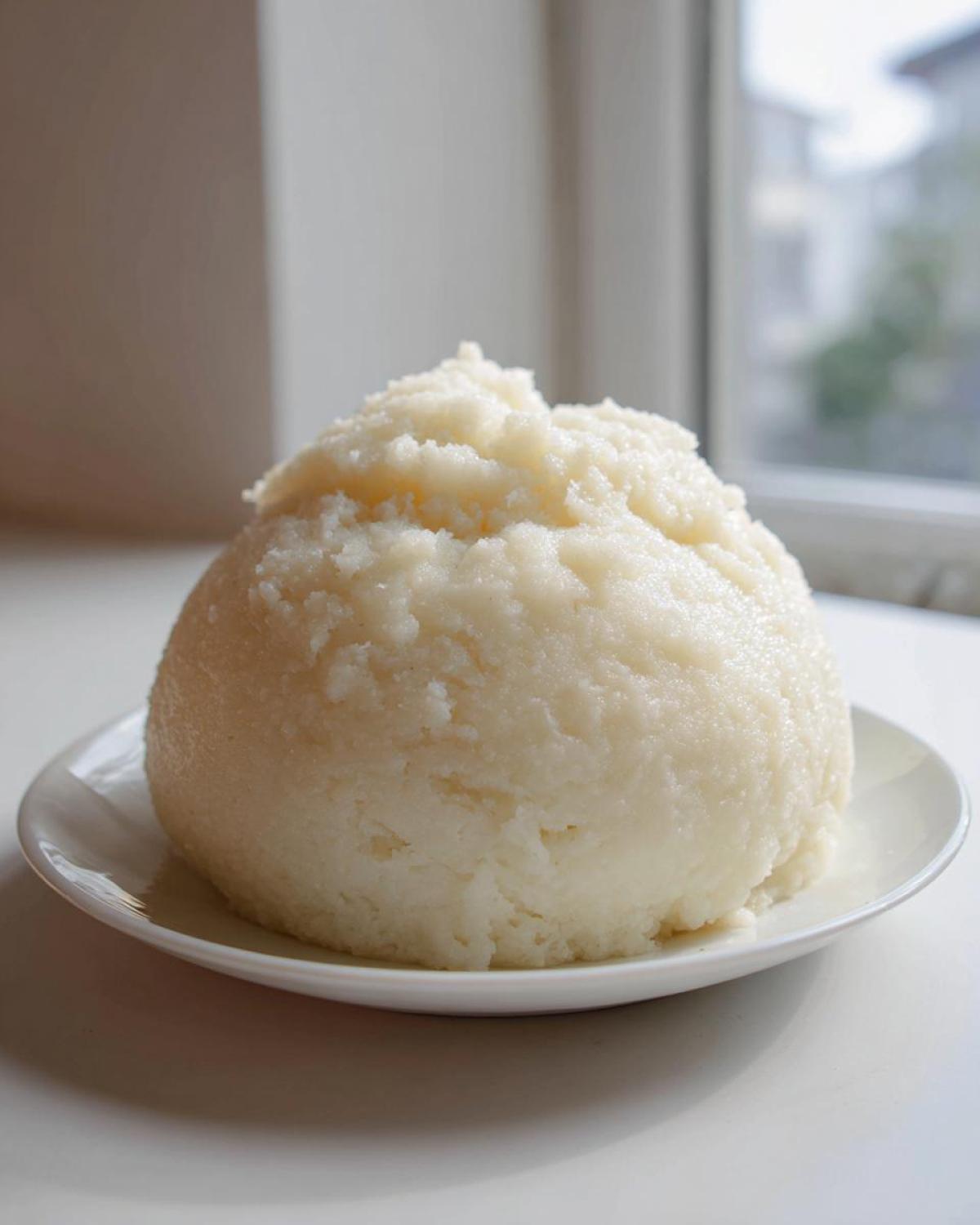
I cannot stress this enough: that second step, making the slurry, is your best friend for skipping lumps entirely! If you skip that, you might as well be trying to fight concrete mid-set. Also, grab your sturdiest wooden spoon for the mixing part. When that fufu mixture starts getting thick, it fights back! A weak plastic spoon might snap, and that’s a true kitchen disaster.
After you take it off the heat, the final kneading is what polishes the texture. It sounds strange, but kneading it by hand for a minute actually makes the final product incredibly smooth rather than grainy. It’s that final touch that makes people ask if you bought it from a professional caterer!
Check out my savory oatmeal recipe if you need a break from stirring! Only the best cookware survives making this dough!
Fufu Serving Suggestions: The Ideal Fufu and Egusi Soup Pairing
When you finally have that perfectly smooth ball of fufu resting on your plate, the real question starts: what are we dipping into it? Traditional etiquette says you mold a small piece—we’re talking golf ball size—into a small depression with your fingers and then you “swallow” it without chewing! It’s so satisfying when the texture is just right.
For the absolute best experience, you simply must pair this with a hearty soup. My go-to favorite, and what I think elevates this dish, is an amazing Egusi Soup. The rich, nutty flavor of the seeds works spectacularly with the mild starchiness of the cassava. If you want to try that pairing, you can find my guide on making amazing coconut curry while you plan your next meal! But don’t stop there! Other classic Fufu serving suggestions include a deeply savory Peanut Soup or a vibrant Okra Soup. Honestly, any thick, flavorful stew is a perfect match for your homemade fufu. You’ve done the hard work making the dough; now enjoy the dip!
Storage and Reheating Instructions for Leftover Fufu
Okay, so maybe you made a giant batch of fufu because you couldn’t stop at one ball—I totally get it! The good news is that leftovers are super easy to manage. Don’t let that perfectly smooth dough go to waste!
For storage, you must get it into an airtight container right away. I usually let mine cool slightly on the counter before sealing it up and popping it into the fridge where it will hold for a couple of days. If you’re not planning on eating it within 48 hours, you might want to look into freezing it; I wrote all about freezing handy leftovers in a different post!
Reheating the refrigerated fufu is my favorite part. Just cut off a portion (don’t try to reheat the whole lump at once!) and pop it into the microwave. The trick is adding just a tiny splash of hot water around it before you heat it up for about 30 to 60 seconds. That splash revives the moisture, and you are back to smooth, dip-ready dough!
Frequently Asked Questions About This Comforting African Meal
I know when you try making a new staple like this, you probably have a ton of little questions buzzing around! That’s completely normal. These questions also help me make sure my instructions for this Comforting African Meal are crystal clear for everyone trying it out. If you ever have privacy concerns about your data, you can check out my full policy here, but let’s get to the cooking stuff!
Is this fufu recipe naturally gluten-free?
Yes, absolutely! Because we are using 100% cassava flour here for this recipe, your final dish is a fantastic, naturally Gluten Free African Side Dish. It lets everyone enjoy this classic side without worry, which is just one more reason I love working with cassava!
What is the difference between Fufu and Eba?
That is such a common point of confusion! The main difference is the ingredient base. While both are essential fufu style doughs, Eba is made specifically from garri (processed, granulated cassava), whereas our recipe uses cassava flour, or you could swap in yam or plantain flour. They have similar functions, but the starting ingredient changes the final texture slightly.
Nutritional Snapshot of Your Cassava Fufu
I know sometimes people worry about what they’re eating, even when it’s comfort food! So here’s a quick look at what’s generally in one serving of this dough based on our recipe. Remember, contact me if you have questions!
- Serving Size: 1 ball
- Calories: 250
- Carbohydrates: 58g
- Protein: 2g
- Fat: 0g
Now, this is just an estimate, so don’t quote me to your doctor! Values can shift a little depending on exactly how much water you used or if you added salt. This is just a general guide for enjoying your delicious fufu.
Share Your Experience Making This West African Fufu Recipe
Well, that’s it! We’ve navigated the stirring, the kneading, and hopefully, you’ve found that perfect soft-yet-firm dough we were aiming for. I truly hope you loved making this West African Fufu Recipe as much as I love making it every single time!
Did you serve it with Egusi or something else amazing? I’m dying to know how yours turned out! Please leave your rating below and share any little tips you discovered along the way—we are all learning together. You can always reach out to me here if you run into any tricky spots on your next try!
PrintEasy Cassava Fufu Recipe for Beginners
Learn how to make traditional West African Fufu using cassava flour. This recipe provides simple steps for creating the perfect starchy side dish to accompany your favorite soups and stews.
- Prep Time: 5 min
- Cook Time: 15 min
- Total Time: 20 min
- Yield: 4 servings
- Category: Side Dish
- Method: Stovetop Cooking
- Cuisine: West African
- Diet: Gluten Free
Ingredients
- 2 cups Cassava Flour (or Fufu Flour mix)
- 3 cups Water
- 1/2 teaspoon Salt (optional)
Instructions
- Place the water in a medium saucepan over medium heat. Bring the water to a simmer.
- In a separate bowl, mix about 1/2 cup of the cassava flour with 1/2 cup of cold water to create a smooth, thin slurry. This prevents lumps.
- Slowly pour the slurry into the simmering water while stirring constantly.
- Continue stirring until the mixture thickens slightly.
- Reduce the heat to low. Add the remaining cassava flour gradually, stirring vigorously with a wooden spoon or sturdy spatula.
- Keep stirring and folding the mixture against the sides of the pot. The mixture will start to pull away from the sides and form a smooth, firm ball. This process takes about 5 to 10 minutes.
- If the fufu is too soft, add a small amount of flour mixed with a little hot water and continue stirring until the desired firm consistency is reached.
- Remove from heat. Wet your hands slightly and knead the fufu ball briefly until it is completely smooth.
- Shape the fufu into small, smooth balls for serving.
Notes
- Serve immediately with soups like Egusi Soup, Peanut Soup, or Okra Soup.
- To store leftovers, place the fufu in an airtight container and refrigerate. Reheat by wrapping portions in plastic wrap and microwaving for 30-60 seconds, adding a splash of hot water if it seems dry.
- You can substitute yam flour or plantain flour for cassava flour, adjusting the water ratio slightly based on the flour type.
Nutrition
- Serving Size: 1 ball
- Calories: 250
- Sugar: 1
- Sodium: 10
- Fat: 0
- Saturated Fat: 0
- Unsaturated Fat: 0
- Trans Fat: 0
- Carbohydrates: 58
- Fiber: 3
- Protein: 2
- Cholesterol: 0